
The Evolution of Parking Management: Moving from Manual Chaos to Cloud-Based Efficiency
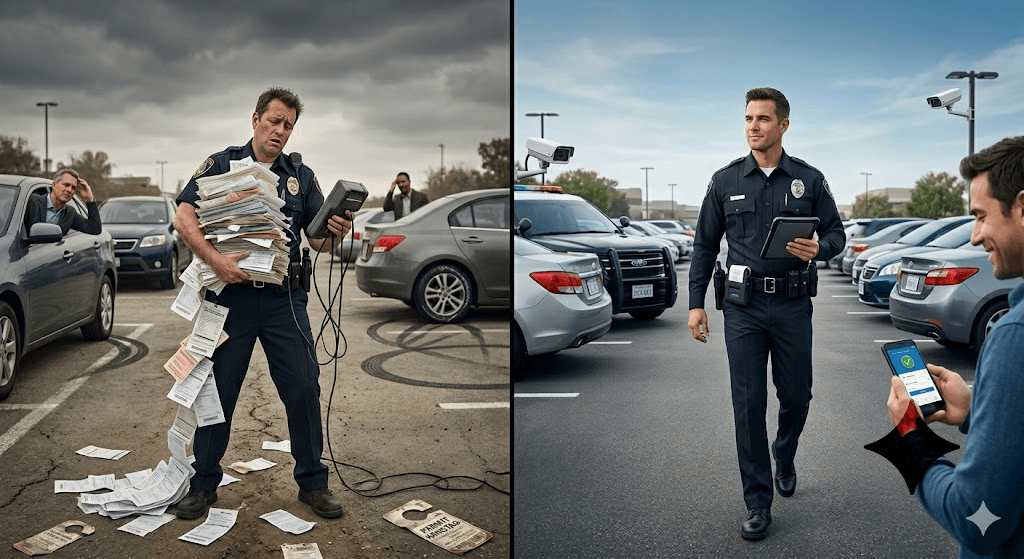
For decades, parking enforcement was a labor-intensive, manual process. Officers relied on paper tickets, expensive legacy hardware, and physical tire chalking, while parking administrators dealt with disconnected data and frustrated parkers.
Today, the parking industry is undergoing a massive transformation. By embracing cloud-based platforms and digital enforcement technology, municipalities, universities, and private operators are turning their parking operations into streamlined, data-driven ecosystems.
Here is a look at how digital advancements are revolutionizing the parking industry and how you can build a more effective, fair, and modern enforcement program.
1. The Shift to Cloud-Based and Digital Enforcement
The days of being tethered to physical docking stations and isolated servers are over. The future of parking management lies in cloud-based solutions, which allow for real-time data syncing, infinite scalability, and remote accessibility.
Furthermore, digital parking enforcement—powered by License Plate Recognition (LPR) technology and automated systems—drastically reduces the workload on patrol officers. Instead of manually checking dash permits or chalking tires, officers can use LPR to instantly verify if a vehicle is authorized to park. This shift provides several major benefits:
- Increased Efficiency: Officers are freed from tedious manual checks and can focus on monitoring traffic flow and addressing safety concerns.
- Maximized Revenue & Reduced Costs: Cloud systems eliminate the need for expensive on-site hardware. Concurrently, automated digital enforcement ensures fewer violations go unnoticed, naturally boosting citation revenue and compliance.
- Real-Time Data: Administrators can monitor parking occupancy and enforcement activities live, allowing them to make data-driven decisions regarding space allocation and future lot designs.
2. Upgrading the Citation Experience
The hardware used to issue citations has also seen a massive upgrade. Legacy handheld ticket devices were notoriously expensive (often costing upwards of $3,500 per unit) and prone to syncing errors.
Today, enforcement utilizes lightweight, innovative Android technology paired with Bluetooth belt printers. Costing a fraction of the price of legacy models, these modern tablets allow officers to issue citations 80% faster. Because they are cloud-connected, they synchronize in real-time with the core parking management system. If a user pays for parking online, the officer’s device is updated instantly, preventing the issuance of invalid tickets. Furthermore, officers can attach photographic evidence directly to the digital citation, reducing disputes and creating a more transparent record.
3. Fostering a Fair and Transparent Appeals Process
No one likes receiving a parking ticket, but modernizing your system actually improves the customer experience by making the process fairer and more transparent.
When a parker believes they were cited unjustly, a digital system makes it easier for them to navigate the appeals process. A modern approach encourages parkers to check their citations for errors, review local parking laws, and submit photographic evidence of their own. By providing a clear, streamlined digital channel for disputes (and clear photographic evidence from the officer), organizations can resolve appeals faster and reduce friction between parkers and administration.
4. How to Build an Effective Enforcement Program
Having the right technology is only half the battle; you also need a strong operational strategy to act as the “glue” for your parking program. To create a highly effective enforcement strategy, operations must focus on:
- Establishing Clear Guidelines: Develop strict, fair, and consistent protocols so that every officer handles violations the same way.
- Data-Driven Patrols: Utilize the historical data generated by your cloud platform to identify peak periods and violation “hotspots.” Schedule your patrols based on these analytics rather than guesswork.
- Continuous Officer Training: As new tools (like LPR cameras and real-time Android handhelds) are introduced, continually train your staff. Empowered officers who understand their technology experience higher job satisfaction and deliver better results.
The Bottom Line
Transitioning to a digital, cloud-based parking environment is no longer just a luxury—it’s a necessity for handling high-density parking efficiently.
By utilizing an all-in-one solution like OperationsCommander (OPS-COM), organizations can seamlessly unite permit management, digital enforcement, and incident tracking under one umbrella. The result? A harmonious parking environment, protected revenues, and a vastly improved experience for both staff and the communities they serve.