
When Parking Software Starts Slowing You Down
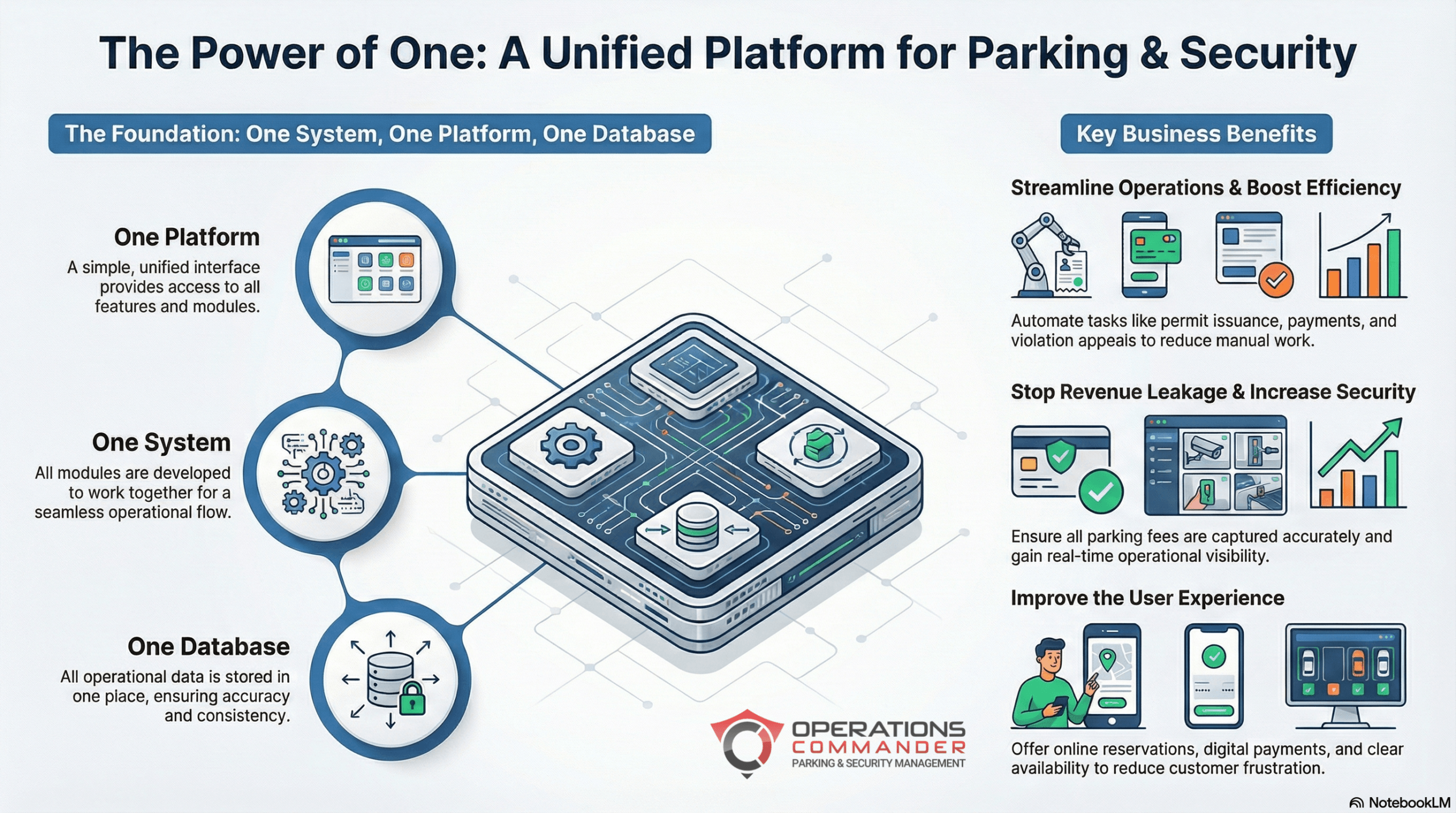
Parking and enforcement teams rarely switch systems on a whim. Most platforms are implemented with care, configured thoughtfully, and relied on daily for mission-critical operations.
But over time, something subtle can happen.
The system that once felt robust begins to feel heavy.
Not broken.
Not failing.
Just harder than it should be.
This is a pattern we increasingly see across campuses, municipalities, and private operators exploring modernization.
The Learning Curve That Never Ends
All enterprise systems require training. That is expected.
What becomes problematic is when the learning curve never levels off.
When:
- New administrators require extensive onboarding just to perform routine tasks
- Staff turnover means retraining becomes a recurring operational cost
- Simple configuration changes require vendor intervention
- Institutional knowledge lives in a few power users instead of in the system itself
Software should compress complexity, not institutionalize it.
At OPSCOM, our approach has always been to design workflows around operational clarity. Permits, enforcement, incidents, and LPR automation share a common architecture so teams are not navigating disconnected modules or memorizing workaround processes.
Efficiency should increase with familiarity.
Cosmetic Updates vs Structural Improvement
Many legacy platforms evolve through visual refreshes.
New dashboards.
Updated themes.
Rebranded portals.
While visual clarity matters, surface-level improvements do not resolve structural friction.
Operational clarity comes from architecture:
- Unified data models
- Native integration between permits, enforcement, incidents, and reporting
- Shared records across modules
- Real-time visibility without manual reconciliation
A system’s appearance can change overnight.
Its architecture defines how it performs for years.
OPSCOM was built as a unified platform from the start, not as a collection of acquired modules. That foundation changes how information flows and how teams experience daily operations.
When Vendors Control Your Configuration
Another common frustration emerges when everyday adjustments require tickets, subcontractors, or layered approvals.
Whether it is text-to-park, temporary permits, or special event setups, parking teams often find themselves dependent on external parties to implement changes.
This introduces:
- Delays
- Limited flexibility
- Inconsistent user experiences
- Support fragmentation
When core tools are subcontracted or loosely integrated, staff effectively become the integration layer.
Our philosophy at OPSCOM is that configuration should reflect your operational logic while preserving platform stability. Customization is about adapting workflows within a unified system, not rewriting code or relying on third-party overlays.
The Hidden Cost of Cumbersome Workflows
Small inefficiencies compound.
Consider enforcement workflows.
In some legacy environments, issuing multiple violations can require separate citations. This creates confusion for drivers, complicates reconciliation, and increases administrative workload.
Modern enforcement tools should:
- Combine infractions into a single citation
- Provide one clear total
- Maintain a unified audit trail
- Sync automatically with reporting and payment records
That level of cohesion is only possible when enforcement, permits, and payment records share the same underlying data model.
What Modern Parking Architecture Should Deliver
As parking operations become more data-driven and more integrated with broader campus and municipal systems, expectations have changed.
Today’s environment demands:
- One unified database across all modules
- Native sharing of permit, plate, and citation data
- Clean audit trails and role-based access
- Administrative configuration without fragile custom code
- Scalable infrastructure that grows without increasing friction
The difference is not cosmetic.
It is structural.
Parking and security operations are too important to rely on systems that require workarounds to function smoothly. The right platform should feel lighter over time, not heavier.
At OPSCOM, we believe operational clarity is not a feature. It is an architectural decision.
If your team is evaluating modernization, exploring how unified platforms differ from legacy environments can be an important first step.
Explore Unified Parking Operations
Learn how OPSCOM connects permits, enforcement, incidents, and LPR automation in a single cloud platform designed for operational clarity.