
Case Study: Canadian Mennonite University
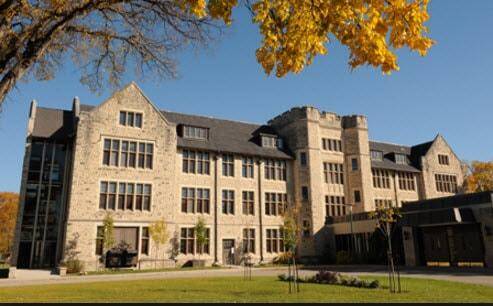
At a Glance
- Industry: Higher Education
- Location: Winnipeg, Manitoba
- Students: Under 3,000
- Parking Lots: 2
- Parking Spaces: 100+
- Annual Permits: ~500
- Annual Violations: ~500
- Modules Implemented: ParkAdmin, ViolationAdmin
- Key Result: Replaced a labor-intensive manual parking operation with a right-sized, affordable online platform that fits a small campus budget
Overview
Canadian Mennonite University (CMU) is a private university in Winnipeg, Manitoba, with an enrollment of under 3,000 students. With just two parking lots and approximately 100 parking spaces, CMU’s parking operation is smaller in scale than many OPSCOM clients — but the challenges it faced were just as real.
Managing permits and violations manually was consuming staff time, creating inconsistent enforcement of the campus’s free two-hour parking policy, and leaving the university without the online tools its community expected. The question wasn’t whether to modernize — it was whether a platform built for larger institutions would make sense at CMU’s scale and budget.
The answer was yes — and the reason comes down to how OPSCOM is built.
The Challenge
CMU’s parking operation was running on manual processes that created unnecessary workload for a small administrative team while delivering a frustrating experience for parkers.
Key challenges included:
- Permit management was entirely manual — time-consuming to administer and difficult to keep accurate
- Enforcing the campus’s free two-hour parking policy relied on physical monitoring with no reliable digital record of vehicle presence or dwell time
- No online payment or self-service options — parkers had to visit the office for routine transactions
- Violation tracking was manual, making it difficult to identify repeat offenders or produce consistent enforcement records
- The cost of enterprise parking software was prohibitive for a small institution with a tight procurement budget
- Liability exposure from handling payments manually rather than through a secure, hosted payment system
For a smaller university, the challenge isn’t just finding a system that works — it’s finding one that works at your scale, without paying for capacity and complexity you don’t need. This is exactly the scenario OPSCOM’s modular, scalable architecture is designed for. As Kim Lair of Cambrian College noted about a similar situation: “Since we are a smaller college with smaller budgets, this product met our requirements while offering support that has been outstanding.”
The Solution
CMU implemented OperationsCommander (OPSCOM) with a focused package of ParkAdmin and ViolationAdmin sized specifically for their operational needs — approximately 500 permits and 500 violations annually.
Rather than implementing the full platform feature set, CMU started with the core capabilities that addressed their most pressing problems: online permit management, time-based parking enforcement, and secure online payment processing.
ParkAdmin — Parking Management
ParkAdmin replaced CMU’s manual permit process with a simple, online self-service environment:
- Online permit purchasing — parkers buy and manage permits without visiting the office
- Self-service account management for the campus community
- Secure, hosted online payment processing — reducing manual cash handling and the associated liability risks
- Centralized permit database replacing manual records
- Reporting tools for permit activity and revenue tracking
ViolationAdmin — Parking Enforcement
ViolationAdmin gave CMU the tools to enforce their two-hour free parking policy consistently and with a defensible digital record:
- Digital tire chalking — vehicle presence tracked digitally using plate data, timestamps, and location rather than physical chalk marks, supporting accurate enforcement of time-limited parking zones
- Violation issuance with photographic evidence attached to each record
- Online violation payment — parkers pay citations without office visits
- Violation history and repeat offender tracking
Critically, the platform was configured and priced to fit CMU’s scale — lower startup costs and lower recurring costs than the alternatives the university evaluated, while delivering the same core functionality available to much larger institutions.
The Results
By moving from manual processes to a right-sized online platform, CMU eliminated the administrative burden of manual parking management while improving the experience for students, staff, and visitors.
Manual Labor Largely Eliminated
The labor-intensive work of managing permits, tracking violations, and processing payments manually has been replaced by online self-service workflows. Staff time that was previously consumed by routine parking transactions is now available for higher-value responsibilities.
Consistent, Defensible Time-Based Enforcement
Digital tire chalking gives CMU’s enforcement team an accurate, timestamped record of vehicle presence in free parking zones — making it straightforward to identify overstays and issue defensible violations. The inconsistency of manual chalk-based enforcement is gone. Learn more about how digital tire chalking works as part of a connected enforcement workflow.
Reduced Payment Liability
With all permit and violation payments processed through a secure hosted payment platform, CMU eliminated the risks associated with manual cash handling — including fraud exposure and reconciliation errors.
A Platform That Grows With the University
CMU started with the essentials and has a clear path to expand the platform as needs evolve. As enrollment grows, parking policy changes, or new operational requirements emerge, OPSCOM’s modular architecture means the university can add functionality without replacing what’s already working. That scalability — starting simple and growing deliberately — is one of the most important qualities a small institution should look for in a parking management platform.
Why OPSCOM
CMU selected OPSCOM because it offered the best combination of functionality, affordability, and scalability for a smaller institution. Competing platforms either lacked the features CMU needed or came with pricing structures designed for much larger operations.
OPSCOM’s hosted payment model and modular approach meant CMU could implement exactly what they needed at a cost that made sense — without compromise on security, functionality, or the ability to grow.
For other small Canadian universities and colleges evaluating parking management platforms, the Brandon University case study offers a similar small-institution perspective, and the Cambrian College case study shows what the platform delivers as operations scale. See also how OPSCOM supports higher education parking operations of all sizes.
About Canadian Mennonite University
Canadian Mennonite University is a private Christian university located in Winnipeg, Manitoba. CMU offers undergraduate programs in arts, sciences, music, and theology, with a strong emphasis on community, service, and interdisciplinary learning. As a smaller institution, CMU is committed to providing a high-quality campus experience while managing resources thoughtfully and efficiently.
