
Parking & Security Operations Explained
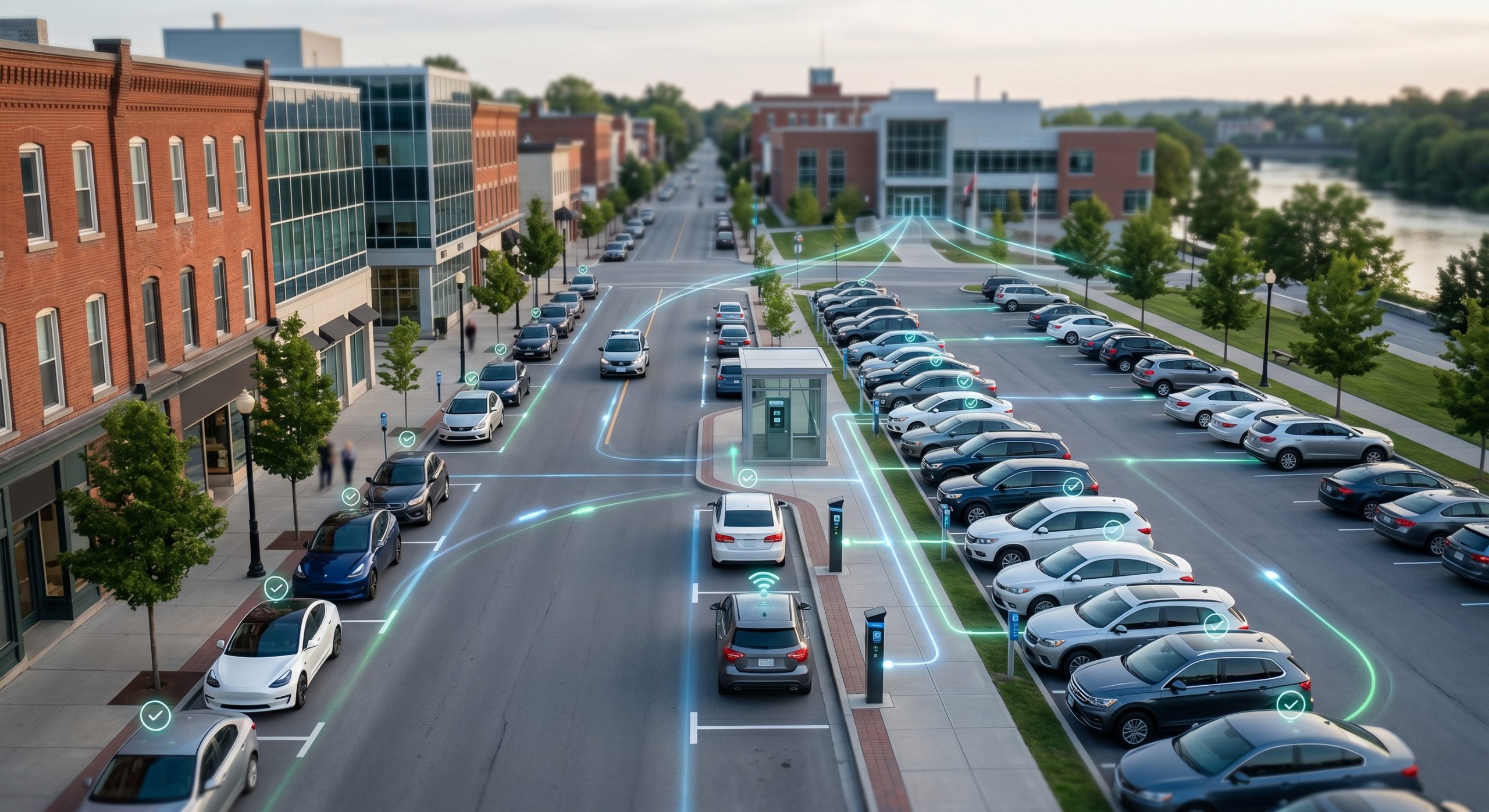
Parking and security operations generate more complexity than most people outside the industry realize. Permits that need to connect to enforcement in real time. Violations that need evidence strong enough to survive disputes. Time-based parking rules that need consistent tracking across multiple officers and shifts. Revenue data that needs to reflect what’s actually happening — not what three disconnected systems each think is happening.
This knowledge center is built for parking professionals, facility managers, campus safety directors, and municipal administrators who want to understand how modern parking and security operations actually work — and what it takes to move from fragmented tools to a connected system that runs reliably.
Each section covers a core area of parking or campus security operations in depth: how it works, what breaks down in practice, and what a well-designed system looks like. Start with the topic most relevant to your current challenges, or work through them in order to build a complete picture of how these areas connect.
What’s in this knowledge center
Parking Management Systems
Most parking problems aren’t caused by bad software or undertrained staff. They’re caused by systems that don’t share data in real time — permits in one place, enforcement in another, payments somewhere else entirely.
This section explains what a modern parking management system actually includes, what the single-database architecture difference means in practice, and what organizations typically switch from when they modernize.
If you’re evaluating parking software or trying to understand why your current setup creates so much manual work, start here.
Explore parking management systems
Parking Enforcement Systems
Enforcement is more than issuing citations. It’s a sequence of connected steps — validation, evidence capture, citation issuance, payment, appeals, and escalation — where each step depends on the one before it. When any part is disconnected, enforcement becomes slower, less consistent, and harder to defend.
This section walks through the full enforcement lifecycle, explains why evidence quality determines dispute outcomes, and covers how enforcement looks different across universities, municipalities, mixed-use developments, and healthcare campuses.
The Town of Perth’s 91% ticket collection rate in Year 1 is one of the clearest examples of what connected enforcement produces in practice.
Explore parking enforcement systems
Digital Tire Chalking
Physical chalk marks get washed away, missed, misinterpreted, and successfully disputed. More significantly, a 2019 US federal appeals court ruling raised serious Fourth Amendment questions about whether physical tire chalking constitutes a search — a question that has created real legal uncertainty for municipalities and organizations that rely on time-based enforcement.
Digital tire chalking replaces the chalk mark with a structured record of vehicle presence: GPS location, timestamp, plate data, and photos. The record is shared in real time across all connected devices, so officers on different shifts work from the same data.
This section explains how it works, the legal landscape, and what it looks like in connected enforcement operations.
License Plate Recognition (LPR)
Most parking professionals have heard of LPR. Fewer understand the factors that determine whether it actually works well in field conditions — read accuracy under real-world constraints, how to choose between handheld, vehicle-mounted, and fixed camera deployments, and most importantly, why integration depth determines whether LPR becomes a real-time decision engine or just a data collection tool that requires manual work downstream.
This section also covers privacy considerations that are particularly relevant for Canadian operations, and the ROI case that makes LPR investment justifiable. Fleming College’s Systems Administrator described the read accuracy improvement after switching to OPSCOM’s PL8RDR as a major improvement — “read accuracy, range of read angles and distance are significantly improved.”
Explore license plate recognition
Parking Data and Analytics
Every parking operation generates data. The question is whether that data is connected enough to be useful — or fragmented across systems in ways that make reports conflict and decisions harder to trust.
This section covers the specific KPIs that matter in parking operations (violation collection rate, permit utilization, occupancy by time and location, compliance rate by zone, repeat offender rate, appeal success rate), the decisions analytics actually enables in practice, and why data quality is a function of system architecture rather than reporting tools.
A large US healthcare organization used OPSCOM utilization data to inform the decision to expand a campus parking garage — a capital infrastructure decision made with confidence because the data was reliable.
Explore parking data and analytics
Campus Parking and Security Operations
Parking facilities are where virtually everyone who comes to campus arrives first — and on an open-access campus, they’re often the least controlled points of entry. That makes parking operations a frontline security function, whether they’re positioned that way or not.
This section covers how connected parking, LPR, and incident management create a unified campus security operation: how plate reads during routine enforcement patrol simultaneously check security watchlists, how incident investigations connect directly to vehicle permit and scan history, and what Clery Act compliance looks like when documentation is built into daily operations rather than assembled at year end.
Carleton University’s Department of University Safety runs parking, enforcement, LPR, and incident management as a single connected OPSCOM platform — with every enforcement patrol contributing to campus situational awareness on every pass.
Explore campus parking and security operations
How these areas connect
Each topic in this knowledge center is often treated as a separate domain — permit software, enforcement tools, LPR hardware, analytics dashboards, security incident systems. In practice, they’re all part of the same operational workflow, and the value of each depends on how well it connects to the others.
Permit data determines what enforcement officers see when they scan a vehicle. Enforcement activity feeds into the analytics that show compliance trends and revenue performance. LPR and digital chalking generate the evidence that makes violations defensible. On campus, those same LPR reads check security watchlists in real time — turning every patrol pass into a perimeter security check. Analytics depends on complete, connected data from every part of the operation.
When these areas operate in separate systems, information gaps appear at every boundary — between permit issuance and enforcement visibility, between field activity and back-office reporting, between violation records and financial reconciliation, between parking patrol and security awareness. When they operate in a single connected system, the gaps close and the operation runs as a continuous workflow rather than a series of disconnected handoffs.
This is the model OperationsCommander (OPSCOM) is built around — one platform, one database, and every part of the operation visible in real time to the people who need it.
Explore by topic
- Parking Management Systems — permits, payments, self-service, and why architecture matters
- Parking Enforcement Systems — the full enforcement lifecycle from patrol to resolution
- Digital Tire Chalking — time-based enforcement, legal considerations, and shared records
- License Plate Recognition (LPR) — deployment types, read accuracy, integration, and privacy
- Parking Data and Analytics — KPIs, operational decisions, and why data quality starts with system design
- Campus Parking and Security Operations — perimeter security, LPR, incident management, and Clery compliance for campus environments
Want to see how these systems work together in a live operation?
