
Case Study: Saint Mary’s University
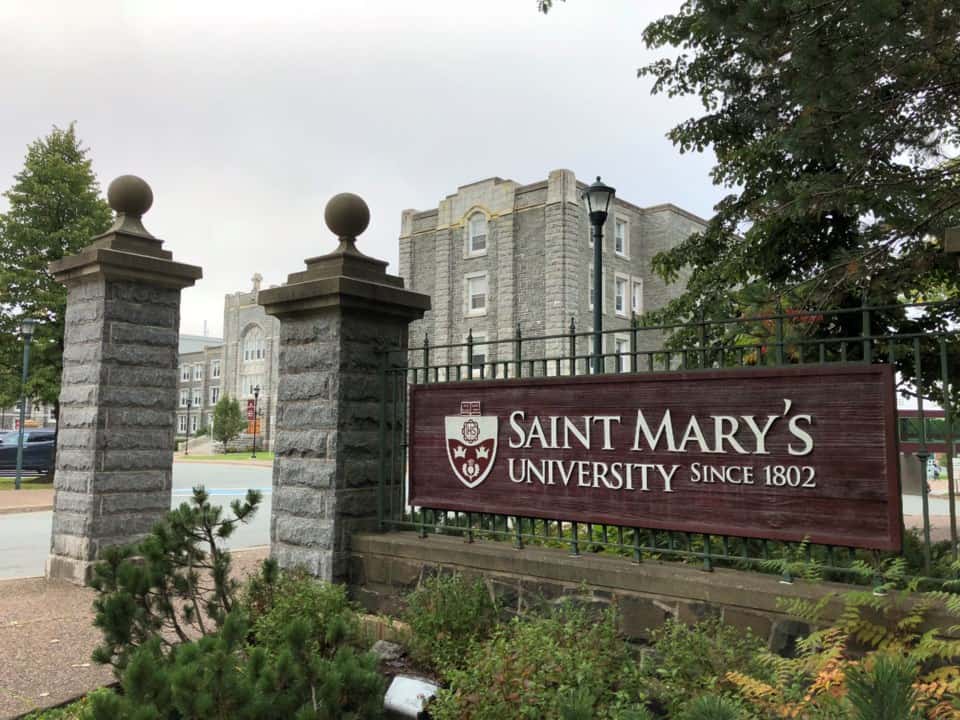
At a Glance
- Industry: Higher Education
- Location: Halifax, Nova Scotia
- Students: 7,000+ from 118 countries
- Campus Size: 80 acres
- Systems Replaced: 4 disconnected platforms consolidated into 1
- Modules Implemented: ParkAdmin, ViolationAdmin, IncidentAdmin, LockerAdmin
- Key Integrations: Ellucian Banner, PCI-compliant online payment portal
- Key Result: Parking, enforcement, security incidents, and campus locker management unified in a single shared database — manual bridging between disconnected systems eliminated
Overview
Saint Mary’s University is one of Canada’s oldest English-language universities, with roots dating to 1802. Located in Halifax’s South End, it serves more than 7,000 students from 118 countries across an 80-acre campus — and its security department is recognized for running a high standard of operation across patrol services, parking, and incident management.
The challenge wasn’t capability. It was architecture. For years, delivering that standard meant running parking management, parking enforcement, security incident reporting, and campus locker administration across four separate systems that didn’t share data. Every time information needed to cross from one operational area to another, a staff member had to bridge the gap manually — exporting, reformatting, re-entering, reconciling.
That kind of friction compounds. A vehicle involved in a security incident has no automatic connection to its permit status. A permit purchase made online doesn’t immediately update what an enforcement officer sees in the field. An incident report prepared for police collaboration requires manual extraction and reformatting before it can go anywhere. Each gap is manageable in isolation. Together, they represent a significant amount of staff time absorbed by process overhead that a connected system handles automatically.
Saint Mary’s set out to fix the architecture, not just the symptoms — replacing four tools with one OperationsCommander (OPSCOM) platform built on a single shared database.
The Challenge
The operational problems at Saint Mary’s before OPSCOM were structural rather than procedural. Staff were working hard; the systems just weren’t designed to work together.
- Four disconnected systems, no unified view. Parking management, enforcement, security incidents, and locker administration each lived in their own platform. There was no single place to see the full operational picture, and no automatic data flow between areas.
- Manual permit management with significant office involvement. Permit purchases, appeals, and payments required in-person counter visits. For a campus serving 7,000+ students, the volume of routine transactions that required staff intervention was substantial.
- Time-limited parking enforcement was labor-intensive. Shared public parking spaces with time limits required manual chalk marking and manual tracking — inconsistent across officers and difficult to defend if challenged.
- Incident data completely siloed from parking and enforcement. Security staff had no visibility into permit or violation history when managing incidents involving vehicles. Parking officers had no awareness of security flags on vehicles they were enforcing against.
- Police report sharing required manual reformatting. When incident information needed to go to local police, staff had to extract records from the incident system and reformat them manually — adding time and introducing risk of error to an already sensitive process.
- No centralized vehicle watchlist. There was no mechanism to flag a vehicle of interest in enforcement and have that flag visible during routine parking patrols. Security and parking operated in genuinely separate worlds.
- Banner financial reconciliation was manual. Financial data from parking and locker transactions had to be manually reconciled with the university’s Ellucian Banner system — time-consuming and prone to inconsistency.
The security department had a clear picture of what they needed: one database, one platform, and workflows that connected all four operational areas without requiring staff to fill the gaps. This is precisely the problem a unified parking and security management system is built to solve.
The Solution: One Database, Four Operational Areas
Saint Mary’s implemented OPSCOM as a single platform replacing all four disconnected systems. The architectural decision — one shared database rather than integrated-but-separate tools — is what makes the operational difference. When a permit is updated, enforcement sees it instantly. When a vehicle is flagged in an incident, that flag is available during the next patrol. When a locker rental is paid, the financial record flows directly to Banner. There’s no export step, no reconciliation step, no version of the data that only lives in one system.
OPSCOM’s role-based access control means each staff member — parking administrator, bylaw officer, security supervisor, locker coordinator — sees exactly what’s relevant to their role. One login, appropriate access, no separate system credentials to manage.
ParkAdmin — Parking Management
ParkAdmin replaced manual permit administration with a fully online, self-service environment — reducing counter traffic for routine transactions and giving administrators real-time visibility into lot usage and financial performance.
- Online permit sales for term and temporary permits — students and staff manage their own accounts without office visits
- Self-service portal for account management, vehicle registration, and payments, accessible at any time
- Flexible permit configurations supporting different user types, pricing tiers, and parking zones across the 80-acre campus
- Time-limited parking management for shared public parking areas — consistent dwell time enforcement rules applied across all connected devices
- Parking lot usage auditing and analytics — giving administrators visibility into occupancy patterns and permit allocation performance across zones
ViolationAdmin — Connected Field Enforcement
ViolationAdmin gave Saint Mary’s enforcement officers a consistent, evidence-based field workflow — replacing manual chalk marking and paper-based tracking with a digital record that’s defensible, shared in real time, and connected to live permit data.
- LTE-connected Android handheld devices with real-time access to permit status, violation history, and vehicle flags
- Digital tire chalking — vehicle presence recorded with GPS coordinates, timestamps, and photographic evidence rather than physical chalk marks, creating a consistent and legally defensible enforcement record shared across all connected officers
- Multiple photos attached to every violation record — clear supporting evidence available immediately when citations are disputed
- Online violation payment and appeals — parkers resolve citations without counter visits, reducing office workload and friction for the campus community
- Real-time data sync — permit purchases and account changes are immediately visible to officers in the field, eliminating the lag between administration and enforcement
The connection between ViolationAdmin and ParkAdmin means the enforcement picture and the permit picture are always the same picture. Learn more about how connected enforcement systems improve accuracy and consistency in campus parking operations.
IncidentAdmin — Security Connected to Parking
This is the capability that most distinguishes Saint Mary’s implementation from a standard parking deployment. IncidentAdmin brings security incident management into the same platform as parking and enforcement — so a vehicle involved in a security event has its permit status and violation history immediately accessible, and a flagged vehicle is visible to enforcement officers during routine patrols.
- Centralized incident reporting and case management for the security team — structured records replacing disparate notes and files
- Role-based access controls — sensitive investigation details visible only to authorized personnel, while enforcement-relevant flags are available to officers in the field
- Vehicle watchlists connected to enforcement workflows — officers receive alerts on vehicles of interest during regular patrol activity, without requiring a separate system check
- Maintenance request tracking integrated into the same platform — facilities issues reported and managed alongside security incidents rather than through a separate channel
- Incident reports exportable in formats compatible with local police department requirements — eliminating the manual extraction and reformatting that previously added time and risk to every police collaboration
The operational value of connecting incidents and enforcement is difficult to quantify precisely, but the mechanism is straightforward: information that was previously siloed is now available where it’s needed, when it’s needed. See how unified parking and security data improves operational awareness across campus environments.
LockerAdmin — Campus Locker Management
Saint Mary’s extended the platform beyond parking and security to include campus locker administration — an operational area that had previously required its own separate tool and its own separate workflows. LockerAdmin brings locker inventory, rental, and payment into the same self-service portal students already use for parking.
- Online locker browsing, reservation, and payment through the student self-service portal — no separate system, no separate login
- Locker inventory management and allocation tracking for administrators
- Rental revenue flowing through the same payment and reporting infrastructure as parking — one financial view across multiple campus services
Consolidating locker management into OPSCOM meant eliminating another standalone system — and another set of manual processes — rather than adding a purpose-built tool that would have created yet another data silo. For a security department already managing parking, enforcement, and incidents in one platform, adding lockers was an extension of the same architecture rather than a new integration problem.
Ellucian Banner Integration
OPSCOM integrates directly with Saint Mary’s Ellucian Banner environment, producing financial exports formatted for direct upload into Banner. Permit revenue, violation payments, and locker rental income all flow from OPSCOM to Banner without manual reconciliation. The finance team gets accurate, timely data; the parking and security team doesn’t have to manage the export process as a separate administrative task.
For Canadian universities running Banner as their student and financial system of record, this integration removes one of the most common friction points in campus parking administration. See the Cambrian College case study for another example of OPSCOM’s integration with campus financial systems.
Results
Four Systems Replaced by One
The headline outcome is architectural: four disconnected systems with manual handoffs between them replaced by a single shared database. That consolidation eliminates a category of administrative work — the bridging, reconciling, and reformatting that staff were doing to compensate for systems that weren’t designed to talk to each other. Those hours go somewhere more useful now.
It also eliminates a category of risk: when the same vehicle record, permit status, or incident flag exists in one place rather than four, there’s no version of the data that’s out of sync, no export that’s a day old, and no gap between what enforcement sees in the field and what administration sees at the desk.
Permit and Locker Self-Service Reduced Counter Traffic
Online permit sales, online locker rentals, online violation payment, and online appeals handling shifted a significant volume of routine transactions away from the counter. For a security department managing parking, enforcement, and campus safety simultaneously, reducing the administrative overhead of routine transactions means staff time goes toward higher-value work. Students and staff benefit from 24/7 self-service access rather than office hours.
Enforcement Records That Hold Up
Digital tire chalking with GPS timestamps and multi-photo violation records gave Saint Mary’s enforcement team consistent, defensible documentation for every citation in time-limited areas. When violations are disputed, the evidence is immediately available in the system — timestamped, photographed, and tied to a specific officer and device. That consistency reduces successful appeals and removes ambiguity from the enforcement process. Learn more about how digital tire chalking supports consistent enforcement across connected campus operations.
Security and Parking Finally Talking to Each Other
Vehicle watchlists active during enforcement patrols. Incident reports structured for police export without manual reformatting. Permit status visible during security event management. These aren’t dramatic capabilities individually — but they represent the practical difference between a security and parking operation that shares a database and one that doesn’t. The operational picture is more complete, the response is faster, and the handoffs that used to require staff effort happen automatically.
Banner Reconciliation Eliminated
Financial data from parking and locker transactions now exports directly to Banner in the required format. The manual reconciliation process — pulling data from multiple sources, formatting it for Banner’s import requirements, checking for discrepancies — is gone. Finance staff get accurate data without the overhead; parking and security staff don’t have to manage the process as a side task.
A Platform That Adapts to Operational Needs
Beyond the platform itself, Saint Mary’s has benefited from OPSCOM’s approach to ongoing support. When the university identified a need for a custom active permits report to improve internal visibility, the OPSCOM team delivered it. That kind of responsive, operationally-specific support — customizing to the actual workflow rather than asking the client to adapt to the software — is what makes a long-term platform partnership function well in practice. It’s also reflected in the parking reporting and analytics capabilities that become more useful as operational data accumulates over time.
One Platform for a Complex Campus Operation
Saint Mary’s experience is a clean illustration of what platform consolidation actually delivers in practice — not just the convenience of fewer logins, but the operational value of a single shared database where information flows automatically across functions that were previously managed in isolation.
Parking, enforcement, security incidents, and locker management are genuinely different operational areas. But they share data — vehicles, people, permits, locations — and when that shared data lives in one place, every function works better. Enforcement is more accurate. Security response is better informed. Financial reporting is cleaner. And the administrative overhead of keeping four systems aligned disappears entirely.
For Canadian universities evaluating a similar consolidation, the Carleton University case study and the Brandon University case study offer relevant points of comparison across different scales and operational mandates.
Read more OPSCOM client case studies or request a demo to see how the platform handles a multi-function campus operation.
Related Resources
- Parking Management Systems — unified platform architecture explained
- Parking Enforcement Systems — connected field operations
- Digital Tire Chalking — consistent, defensible time-based enforcement
- Parking Data and Analytics — operational reporting across a unified platform
- OPSCOM for Higher Education — campus parking and security
- IncidentAdmin — campus safety and incident management
- How Unified Parking and Security Data Improves Operational Awareness
- Carleton University — parking and campus safety unified at scale
- Brandon University — revenue visibility and enforcement modernization
- Cambrian College — 37% budget savings with a fully integrated platform
