Clery Act Compliance: Why Incident Documentation Is the Real Work
Every year, US colleges and universities participating in federal financial aid programs produce an Annual Security Report. The document covers campus crime statistics, safety policies, emergency procedures, and a range of required disclosures — and it needs to accurately reflect what actually happened on and around campus during the preceding three years.
Institutions that get it wrong face fines that have reached into the millions of dollars. More significantly, they face the operational reality that inaccurate Clery reporting usually isn’t a reporting failure — it’s a documentation failure that became visible at reporting time.
The Clery Act compliance challenge, for most institutions, is a year-round documentation problem that gets treated as an annual reporting problem. Those are not the same thing, and the difference matters.
What Clery actually requires — and where parking fits
The Clery Act imposes several distinct obligations beyond the Annual Security Report. Daily crime log maintenance, timely warning notifications, emergency notification procedures, and accurate geographic classification of incidents all require ongoing operational discipline, not just an annual data pull.
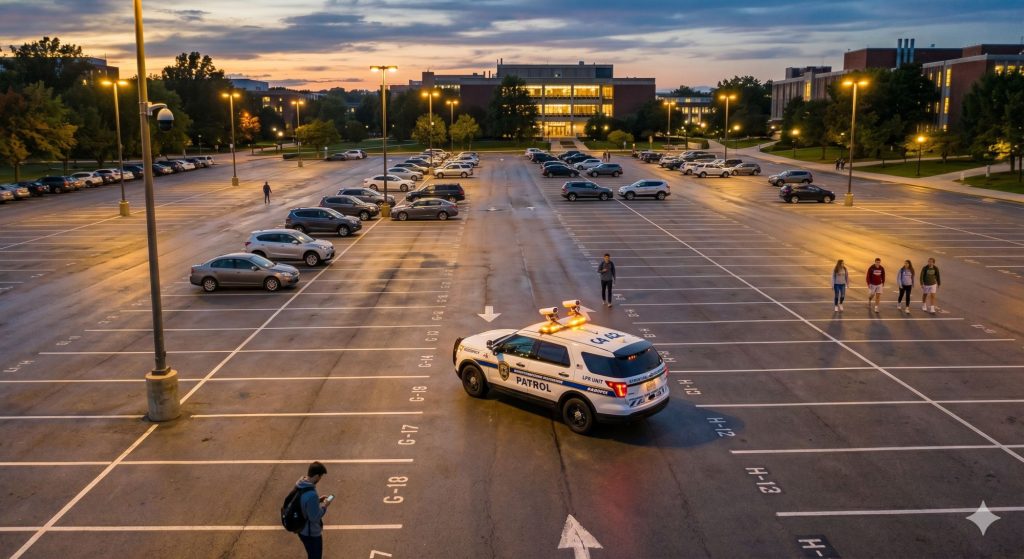
The geographic requirements are where parking becomes directly relevant. Clery geography includes not just buildings and residential facilities but also parking facilities, public property immediately adjacent to campus, and non-campus properties used for institutional purposes. Incidents that occur in parking lots, parking structures, and the roads and pathways surrounding campus are all subject to Clery classification and reporting.
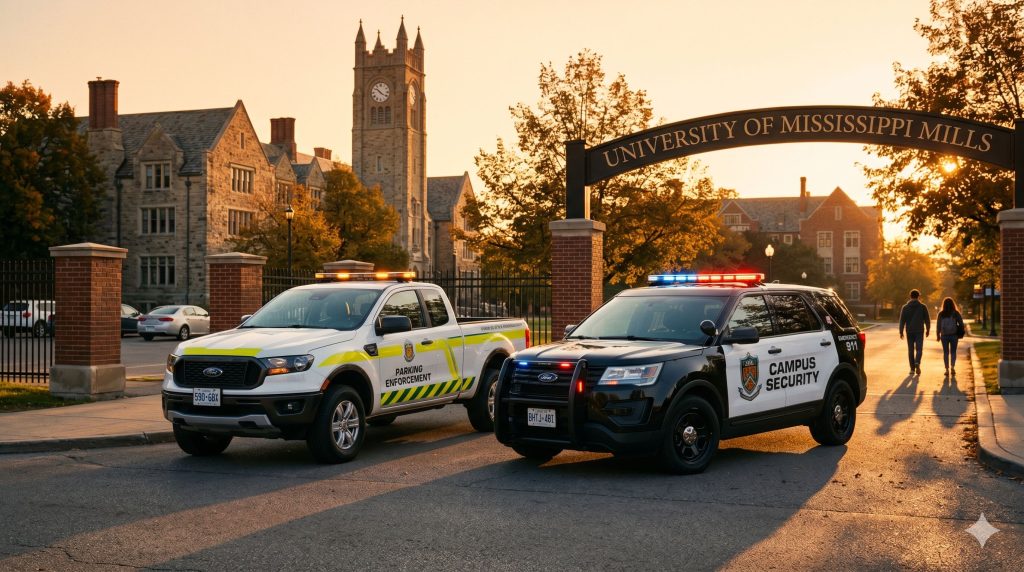
For institutions where parking operations and security operations run on separate systems, that creates a documentation challenge from the start. Incidents that occur in or near parking areas may be reported through different channels, logged in different systems, and classified by people who don’t have visibility into both sides of the operation. Ensuring complete and consistent classification across all Clery geography requires deliberate effort — and usually manual reconciliation — that shouldn’t be necessary if the systems were connected.
The daily crime log: where compliance is actually built
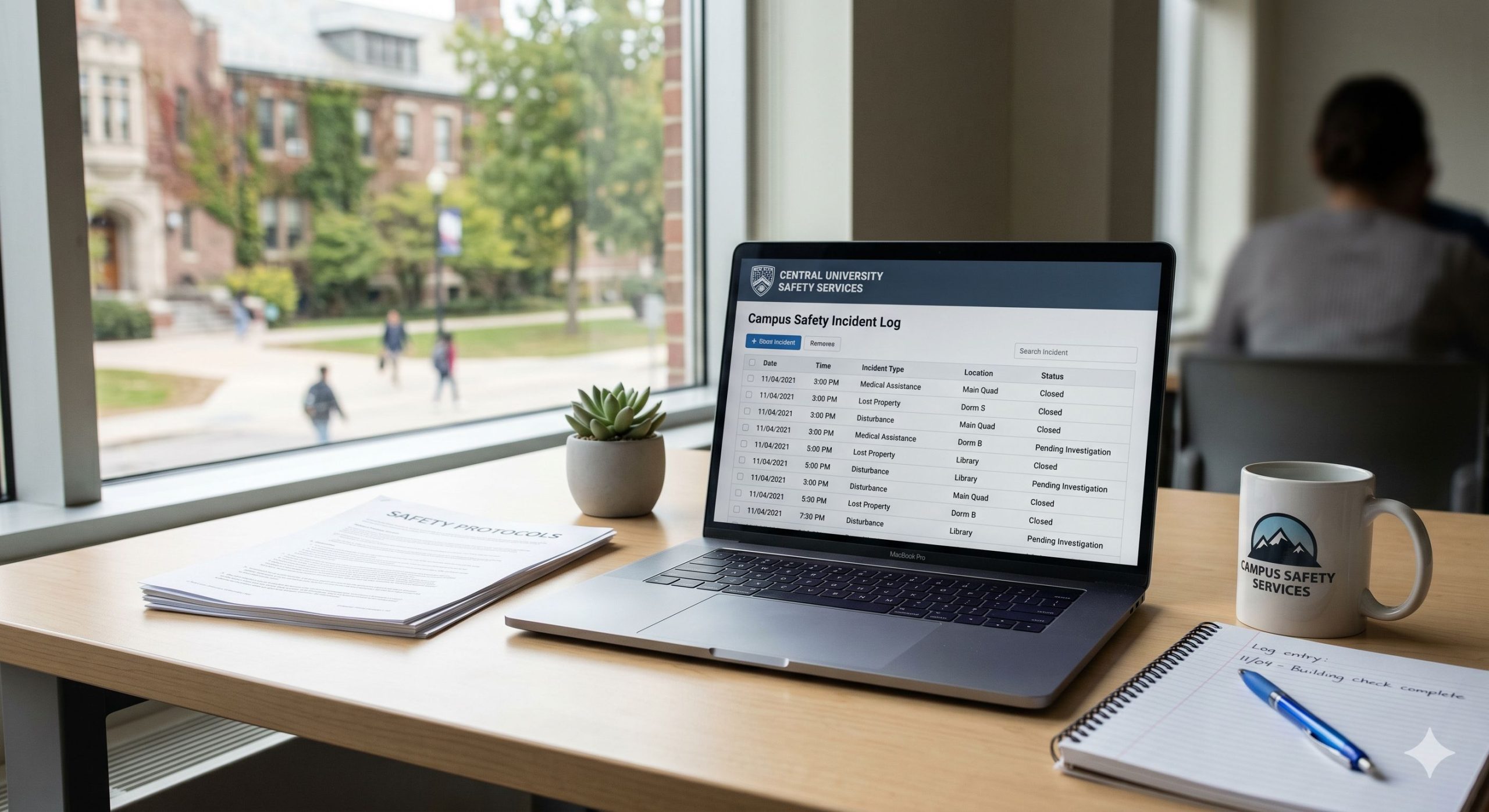
The Clery Act requires institutions to maintain a daily crime log recording all crimes reported to campus security authorities. The log must be publicly available within two business days of a report, include specific crime categories and geographic classifications, and be retained for at least seven years.
That’s a daily operational requirement, not an annual one. Institutions that treat Clery compliance as an annual reporting exercise often discover at year-end that their daily log has gaps — incidents that were handled but not formally logged, classifications that weren’t applied consistently, geographic designations that weren’t recorded at the time and now need to be reconstructed from memory or incomplete notes.
When campus safety operations use a connected incident management system as the standard method for documenting all activity — not just major incidents, but all reported crimes and security-relevant observations — the daily log is built through normal operational use. Every report logged in IncidentAdmin includes the location, incident type, and classification data the daily log requires, entered at the time of the report by the officer handling it. There’s no separate log to maintain because the incident management system is the log.
Timely warnings and emergency notifications
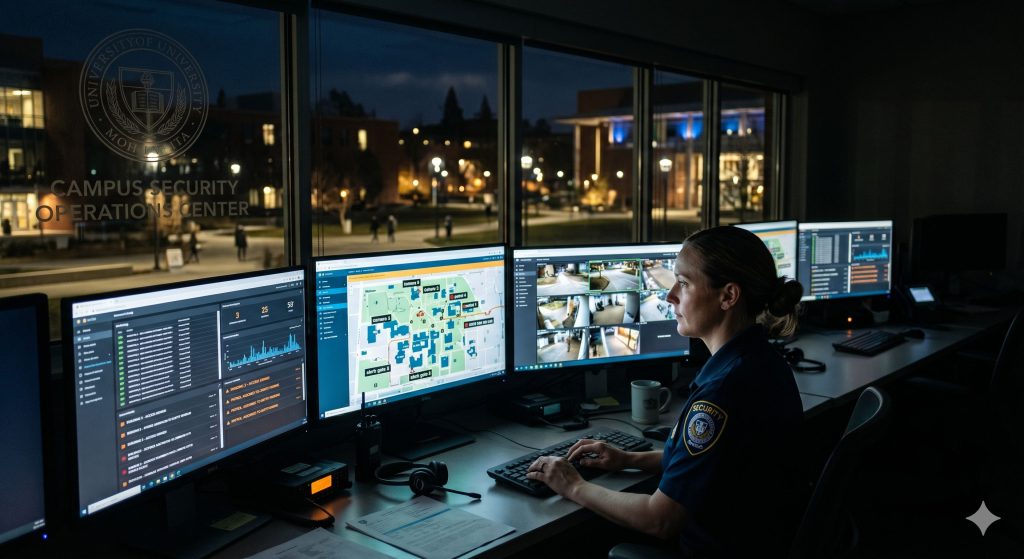
When a Clery-covered crime represents an ongoing or serious threat to the campus community, institutions are required to issue a timely warning. When there’s an immediate threat to health or safety, an emergency notification is required. Both obligations require fast, accurate information about what occurred, where, and whether the threat is ongoing — which is exactly the kind of operational picture that a connected incident management system provides.
Institutions without centralized incident documentation often find timely warning decisions complicated by the need to first establish what actually happened — piecing together reports from officers, dispatch logs, and departmental records before the situation can be assessed and a notification drafted. By the time the picture is clear enough to act on, the “timely” element of the obligation is already under pressure.
When incident information is captured in real time through a connected system, decision-makers see an accurate operational picture as events unfold — not assembled after the fact. The assessment and drafting work can happen on the actual timeline the situation requires.
Vehicle incidents and the parking-security documentation connection
A significant portion of campus crimes reported under Clery involve vehicles — theft, vandalism, hit and run, suspicious vehicle activity near residential or academic facilities. These incidents often involve parking areas, which means the documentation is most complete when the incident record connects directly to parking data.
In OPSCOM, an incident report involving a vehicle created in IncidentAdmin automatically connects to that vehicle’s permit registration, enforcement history, and LPR scan records. The geographic location of the incident is recorded with GPS precision at the time of reporting. The Clery classification — parking facility, campus property, public property adjacent to campus — is applied by the officer logging the report, not reconstructed later by a compliance officer trying to determine where something happened.
That connection between parking context and incident documentation is what makes Clery-covered vehicle incidents easier to classify accurately and consistently. The data is there at the time it’s needed, not scattered across systems that need to be reconciled after the fact.
Annual Security Report preparation
Producing an accurate Annual Security Report requires pulling three years of Clery-covered crime statistics, verifying classifications, confirming geographic designations, and compiling the supporting policy disclosures. For institutions with well-maintained daily logs and consistent incident documentation throughout the year, that process is primarily organizational. For institutions reconstructing incident records from incomplete documentation, it’s considerably more difficult — and more likely to produce a report that doesn’t accurately reflect what actually occurred.
OPSCOM’s Clery Act reporting workflows support Annual Security Report preparation by providing structured access to incident records organized by date range, incident type, and Clery geographic classification. The records that feed the Annual Security Report are the same records built through daily incident documentation — not a separate dataset assembled for reporting purposes.
That consistency — between daily operational records and annual reporting data — is what produces accurate Clery reports. It’s also what makes those reports defensible under scrutiny, because the underlying documentation reflects real-time recordkeeping rather than retrospective reconstruction.
What good Clery documentation practice actually looks like
Across OPSCOM’s campus clients, the institutions with the most confident Clery compliance posture tend to share a few operational practices:
Incident documentation happens in real time, at the time of the report, by the officer handling it — not assembled later from notes. Officers understand what constitutes a reportable incident and log it in the system rather than deciding informally that something doesn’t need to be recorded. Administrators with compliance responsibility have direct access to incident records and can monitor documentation quality throughout the year rather than discovering gaps at reporting time. Geographic classifications are applied consistently using the same location categories the Clery framework requires.
None of those practices require specialized Clery expertise at the officer level. They require a system that makes consistent documentation the path of least resistance, and administrative visibility that keeps the daily log accurate between reporting periods.
That’s a technology and workflow problem as much as a training problem — and it’s one that a connected incident management system addresses directly.
Clery compliance as an operational outcome, not an annual event
The institutions that struggle most with Clery compliance are rarely operating in bad faith. They’re operating with disconnected systems, informal documentation habits, and compliance functions that only engage with incident data at reporting time — by which point the documentation gaps are already baked in.
The path to confident Clery compliance runs through better daily documentation, not better annual reporting. When incident management is connected to parking, LPR, and the full operational picture, the records that Clery requires are built through the work the safety team is already doing — not assembled separately under deadline pressure once a year.
Learn more about how OPSCOM supports Clery Act reporting and campus incident documentation, or explore the broader campus security picture in the Campus Security Operations Knowledge Center.
Related reading
- Campus Parking as a Security Layer: It Starts in the Lot
- Campus Incident Management: How Safety Teams Coordinate in Real Time
- Clery Act Reporting — OPSCOM
- Campus Security Operations — Knowledge Center
- OPSCOM for Higher Education
- Carleton University Case Study
- Saint Mary’s University Case Study