LPR Parking Enforcement Software: Why Integration Defines Performance

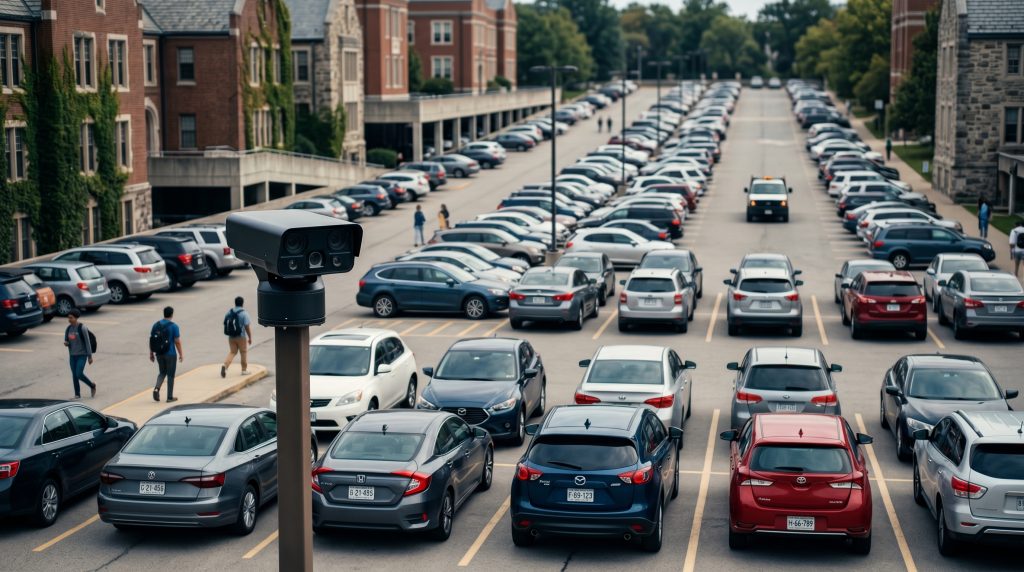
When parking operations evaluate LPR, the conversation often focuses on hardware. Camera resolution, mounting options, vehicle compatibility, read angle range, infrared capability — these are the specifications that fill product comparison sheets and procurement conversations.
Hardware matters. But hardware is not what determines whether an LPR deployment succeeds or fails operationally. The factor that most consistently separates effective LPR implementations from disappointing ones is integration — specifically, how deeply the LPR system connects to the permit database, enforcement workflow, payment system, and analytics environment it’s supposed to support.
This post makes the integration case explicitly, because it’s the argument that rarely appears in LPR hardware conversations and most directly explains the performance difference between connected and standalone LPR deployments.
What standalone LPR actually delivers
A standalone LPR system — cameras, processing hardware, and software that reads plates and returns a status — is a faster plate reader than a human. That’s genuinely useful. But its usefulness is bounded by the quality and currency of the data it’s reading against.
If the standalone LPR system matches plates against a permit database that was exported at 6am, it’s effectively operating on a six-hour-old snapshot by afternoon. Permits purchased since 6am don’t appear. Permits cancelled since 6am still appear. Citations issued during the morning patrol are invisible to the system — meaning the same vehicle can be cited twice for the same violation on the same day, which generates disputes and erodes parker trust in the operation’s fairness.
If the standalone LPR system doesn’t connect to the citation issuance workflow, the officer who receives an alert still needs to enter the citation manually in a separate system. The LPR accelerated detection; it didn’t eliminate the paperwork. If that citation system doesn’t connect to payment in real time, the parker won’t be able to pay until the citation is entered — which may not be until end of shift.
Each disconnection compounds. Standalone LPR that returns fast reads against stale data, feeding manual citation entry into a disconnected payment system, doesn’t deliver the operational improvements that justify LPR investment. It’s faster at the detection step and slower everywhere else.
The data currency requirement
The most important integration for LPR performance is the one that gets least attention: the connection to a live permit database.
In OPSCOM, LPR plate reads query the ParkAdmin permit database in real time — the same database that the self-service portal, the administrative interface, and the payment system all read from. There is no export schedule. There is no sync frequency. A permit purchased at 10:15am is visible to an LPR patrol at 10:16am, because both the permit purchase and the LPR validation are operating against the same live record.
This data currency is what makes enforcement accuracy possible at scale. The category of invalid citations caused by stale permit data — which in many fragmented operations is a significant percentage of all disputed citations — is essentially eliminated when LPR is validating against live data. Each citation that’s correctly not issued saves the administrative cost of a dispute, a void, and a parker interaction that could have been avoided.
For the full architecture argument on why connected systems outperform integrated ones, see Parking System Architecture: Why a Single System Matters.
The enforcement workflow connection
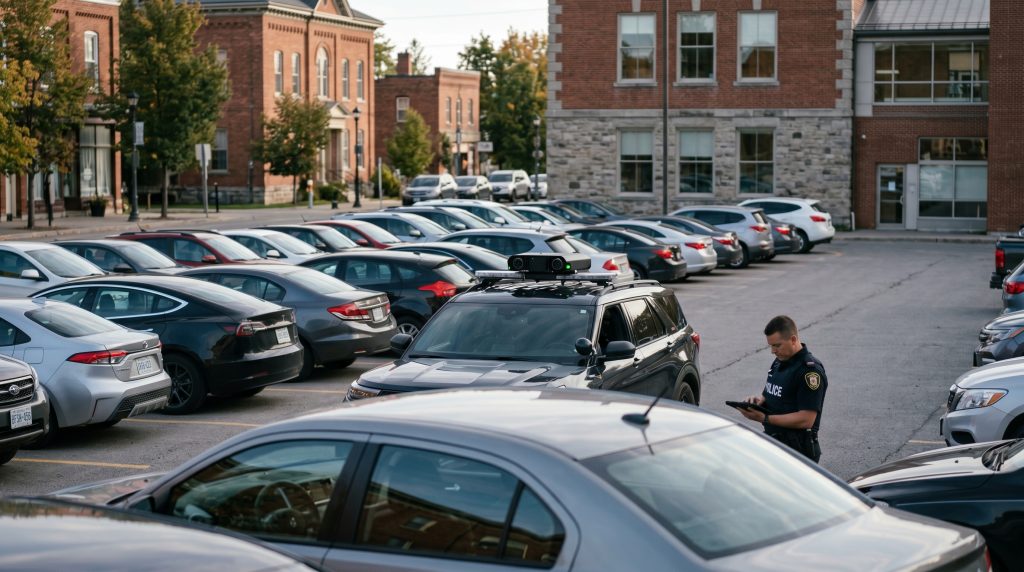
When an LPR read triggers a violation alert, the citation workflow should begin immediately — not after the officer manually re-enters the plate in a different application. In OPSCOM, the LPR read pre-populates the citation record in ViolationAdmin with the plate, vehicle image, GPS coordinates, timestamp, and violation type. The officer reviews, confirms, and issues — often in under thirty seconds.
That citation is immediately available in the payment portal. The parker who returns to their vehicle five minutes after it was issued can find and pay the citation before leaving the area. No batch upload. No delay. No window where the citation exists in the enforcement system but not in the payment system.
This immediate availability matters for collection rates in a way that’s easy to underestimate. Parkers who intend to pay are most likely to follow through when payment is immediately available and frictionless. Every hour of delay between citation issuance and payment availability is an opportunity for the parker to forget, decide it’s too complicated, or lose the citation details. The Town of Perth’s 91% collection rate in Year 1 reflects what happens when citation-to-payment friction is minimized from both ends — accurate citation issuance and immediate payment availability. Read the Town of Perth case study.
The digital chalking connection
Time-based enforcement requires LPR to do more than validate permits. It requires the system to track when a vehicle was first observed in a time-limited zone and calculate elapsed dwell time on subsequent observations.
This is only possible when LPR is connected to a digital chalking system that persists first-observation records across patrol passes, officers, and shifts. In OPSCOM, the digital tire chalking module integrates directly with LPR reads. Every plate read in a time-limited zone is checked against the chalking database, and every first observation is recorded automatically.
Standalone LPR that doesn’t connect to a chalking system can validate permits but can’t enforce time limits — which eliminates its usefulness for a significant category of common enforcement scenarios. LPR integrated with digital chalking handles time-based enforcement at the same patrol speed as permit-based enforcement, without any additional officer action. For the detailed picture of how LPR and digital chalking work together, see Digital Tire Chalking and LPR: How They Work Together in Modern Enforcement.
The security and watchlist connection
In organizations where parking enforcement and security operations share a platform, every LPR patrol pass is simultaneously a permit validation and a security check. Plates flagged in IncidentAdmin — BOLO vehicles, campus safety concerns, access-restricted plates — surface as alerts through the same LPR interface that handles permit violations.
This connection requires no additional officer action or attention. The security watchlist check happens automatically as part of every LPR read. The officer who encounters a flagged vehicle during routine permit patrol receives the alert immediately — without needing to check a separate security system, without waiting for a radio notification, without any inter-department coordination in real time.
For standalone LPR systems that don’t connect to security watchlists, this capability simply doesn’t exist. Parking patrol and security patrol are operationally separate, and the vehicle that appears on both the parking enforcement and security concern radar is only identified if both officers happen to encounter it and compare notes. Carleton University’s Department of University Safety built their entire operation around avoiding exactly this gap. Read the Carleton University case study.
The analytics connection
Every LPR read in a connected system contributes to the operational data picture. Not just violations — every read, including compliant vehicles. The cumulative read log produces occupancy patterns, coverage audit trails, repeat offender data, and patrol efficiency metrics that are only available when LPR data is stored in the same database as permit, enforcement, and payment data.
Standalone LPR systems typically produce read logs — files or databases of plate reads that are separate from the parking operation’s other data systems. To get meaningful analytics from those logs, someone has to export them, import them into an analysis tool, and join them against permit and enforcement records from other systems. This is technically possible but rarely happens in practice, which means the analytical value of the LPR data is largely unrealized.
In OPSCOM, LPR reads are part of the unified operational database. The analytics that depend on combining read data with permit data, enforcement data, and payment data are available as standard reporting — no export, no import, no joining against external systems. For how unified parking data supports operational decision-making, see the Parking Data and Analytics Knowledge Center.
Evaluating LPR software: the integration questions to ask
When evaluating LPR for a parking enforcement operation, the hardware specifications matter — but the integration questions matter more. Specifically:
- Does the LPR system validate against live permit data, or against a periodically exported list? If the latter, what is the export frequency, and what happens to permits purchased between exports?
- When an LPR read triggers a violation, does it pre-populate the citation workflow automatically, or does the officer re-enter the plate in a separate system?
- Does the citation appear in the payment portal immediately after issuance, or after a sync runs?
- Does the LPR system connect to a digital chalking record for time-based enforcement? If not, how are time-limit violations handled?
- Does the LPR system surface security watchlist alerts from the same interface as permit violation alerts?
- Are LPR reads stored in the same database as permit and enforcement records, making combined analytics possible without data export?
A system that answers these questions well is a connected LPR system. A system that answers them poorly or partially is a hardware deployment bolted onto a fragmented data environment — and its performance in the field will reflect that.
OPSCOM’s PL8RDR platform is built as an integrated component of the broader OPSCOM system, not as standalone hardware with a software wrapper. Every integration described in this post is standard, not an add-on — because in a genuinely connected system, they’re not integrations at all. They’re just how the system works.
Explore LPR in depth
- License Plate Recognition (LPR): How It Works in Modern Parking Enforcement
- LPR in Parking Enforcement Operations: How Patrols Actually Work
- LPR ROI: What License Plate Recognition Delivers in Parking Enforcement
- Using LPR for Compliance Monitoring in Parking Enforcement
- PL8RDR: OPSCOM’s LPR platform
- License Plate Recognition Knowledge Center