Digital Tire Chalking and LPR: How They Work Together in Modern Enforcement
Digital tire chalking and license plate recognition are each valuable enforcement capabilities on their own. Together, they change the operational model for time-based enforcement in ways that neither achieves independently.
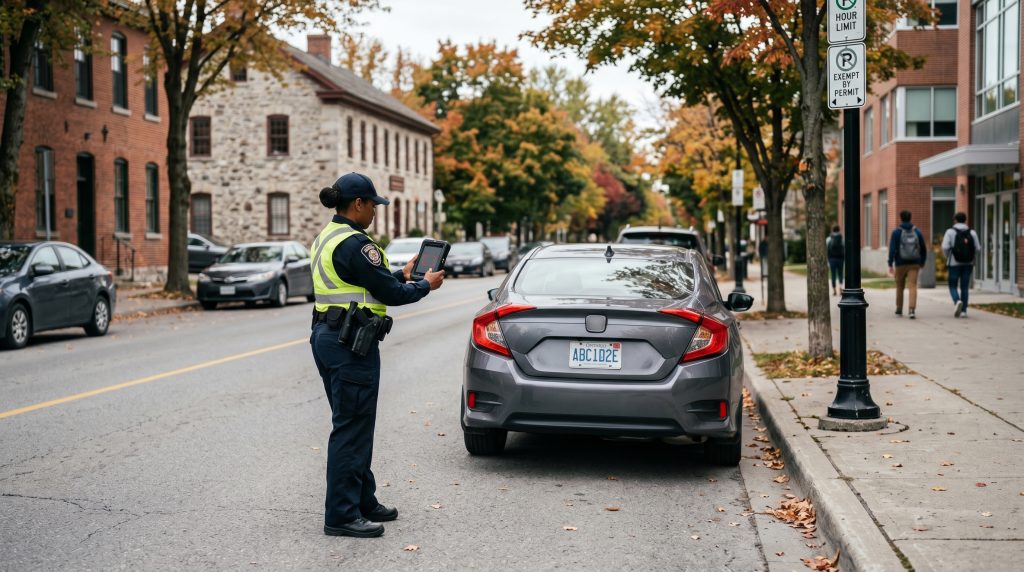
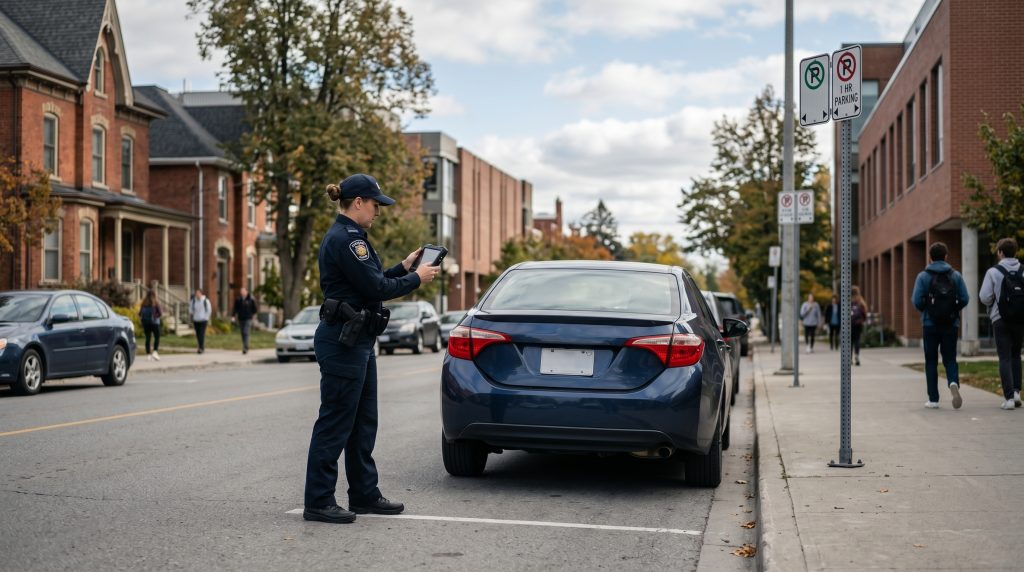
Manual digital chalking — an officer scanning each plate with a handheld device — is more accurate and defensible than physical chalk, but it’s still bounded by the officer’s ability to approach each vehicle individually. In a large lot or a dense downtown zone with hundreds of spaces, creating first-observation records for every vehicle in a reasonable patrol window is a significant operational challenge.
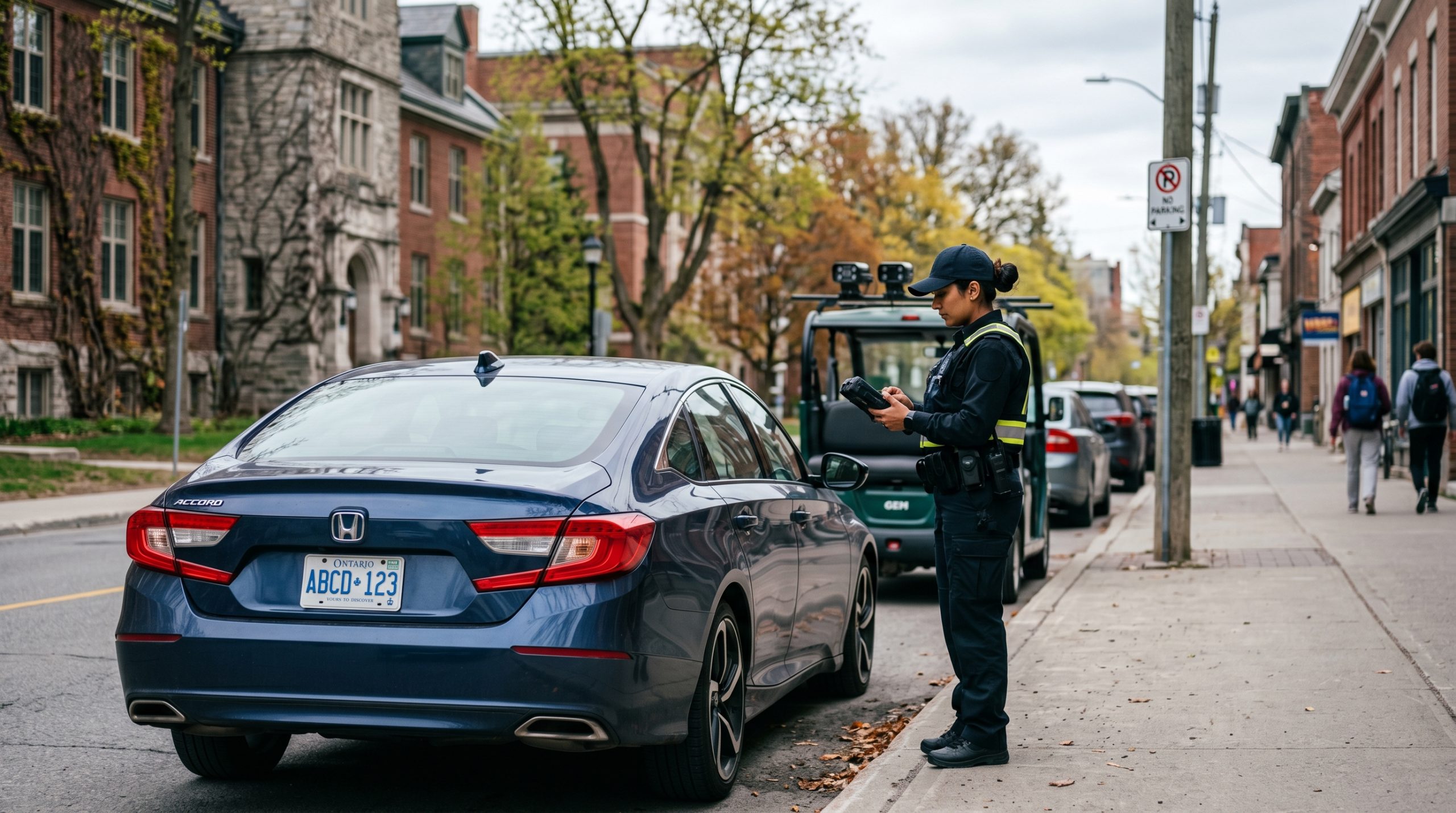
Vehicle-mounted LPR removes that constraint. As a patrol vehicle drives through a zone, the LPR camera captures and processes every plate it passes — and the digital chalking system records first observations automatically for each one, at patrol speed, without the officer stopping or manually scanning individual vehicles. Time-based enforcement coverage that would take an officer on foot hours to complete happens in a single drive-through pass.
This post covers how digital chalking and LPR work together in OPSCOM, what the combined workflow looks like in practice, and what operational capabilities become available when both systems are connected.
How LPR automates first observation recording
In a standard digital chalking workflow without LPR, the officer creates a first-observation record by manually scanning each vehicle’s plate with their mobile device. In a vehicle-mounted LPR deployment, the cameras do this automatically.
As the patrol vehicle moves through a time-limited zone, the PL8RDR cameras capture plate images continuously. Each plate is read, and the system checks the chalking database. For plates with no existing first-observation record, the system creates one automatically: plate, zone, GPS coordinates, timestamp. For plates with an existing record, the system calculates dwell time and flags violations if the limit has been exceeded.
The officer doesn’t initiate these records manually. They’re created as a byproduct of driving through the zone. The officer’s attention is only required when an alert fires — a violation threshold exceeded, a watchlist match, a permit issue — not for the routine first-observation recording that the LPR system handles continuously.
What this changes for coverage efficiency
The coverage efficiency argument for LPR-integrated digital chalking is direct. Consider a municipal downtown zone with 300 metered or time-limited spaces across several blocks.
Manual first-observation recording: an officer on foot, scanning each vehicle individually, covers roughly 200-250 vehicles per hour under good conditions. Covering all 300 spaces takes over an hour. By the time the officer reaches the last block, the first block hasn’t been observed again for over an hour — which matters for short two-hour limits where second patrols need to happen on schedule.
LPR-integrated first-observation recording: a patrol vehicle driving at normal street speed records first observations for every vehicle in the zone in a single pass, typically 10-15 minutes. The entire 300-space zone is covered. Second patrol passes can happen more frequently because the first passes are faster. For zones with thirty-minute or one-hour limits, this frequency matters enormously.
Forks North Portage manages parking across 20+ lots in a major Winnipeg mixed-use destination complex. Vehicle-mounted LPR patrol, integrated with digital chalking, makes consistent time-based enforcement across that portfolio achievable with available staff. Without LPR, comprehensive chalking coverage across 20+ lots would require either significantly more enforcement staff or accepting that some lots are consistently under-enforced. Read the Forks North Portage case study.
The two-pass pattern with LPR
The operational pattern for LPR-integrated time-based enforcement follows the same logic as manual digital chalking, but at a different scale and speed.
First pass. The patrol vehicle drives through the zone. LPR cameras capture every plate. For vehicles with no prior observation in the current enforcement session, first-observation records are created automatically. For vehicles with existing records, dwell time is calculated. At this point in the session, most vehicles will be recent arrivals — the first pass establishes the observation baseline.
Second pass. The patrol vehicle returns to the zone after an appropriate interval — determined by the zone’s time limit. LPR cameras capture every plate again. The system calculates dwell time for each vehicle against its first-observation record. Vehicles that have been present since the first pass and have exceeded the time limit are flagged for violation. The officer receives alerts for each flagged vehicle and issues citations.
The interval between passes is calibrated to the zone’s time limit and the enforcement objective. For a two-hour zone, a second pass at two hours and fifteen minutes gives a reasonable dwell time calculation with a practical grace window. For a thirty-minute loading zone, passes need to happen more frequently to catch violations before vehicles depart.
Handling permit-exempt vehicles in time-limited zones
Many time-limited zones have permit-exempt vehicles — monthly parkers, resident permit holders, or other categories whose permits allow them to exceed the standard time limit. In a manual enforcement environment, managing these exemptions requires the officer to cross-reference the plate against a permit list and remember which vehicles are exempt from the time limit versus just the permit requirement.
In OPSCOM, this is handled automatically. When the LPR system flags a dwell-time violation, the system simultaneously checks the plate’s permit status. A vehicle with a valid permit that includes a time-limit exemption for the current zone is cleared, not cited — even if the dwell time calculation exceeds the posted limit. The officer sees a compliant result rather than a violation alert.
This automatic exemption handling prevents the category of invalid citation that occurs when an officer manually applies time-limit rules without checking whether the specific vehicle is exempt. It’s the same compliance automation principle that applies to permit enforcement generally, applied specifically to the time-based enforcement workflow. For more on how rule-based exemptions work, see Compliance Automation in Parking Enforcement.
Evidence quality with LPR-assisted chalking
The evidence record produced by LPR-integrated digital chalking is particularly strong because both observations are photographically documented automatically — not dependent on the officer remembering to take a photograph at each step.
The first observation includes the LPR camera’s image of the vehicle, the GPS coordinates at the time of the read, and the exact timestamp. The second observation includes the same elements. When a parker disputes a time-limit citation issued through LPR-assisted chalking, the evidence record shows two clear photographs of their vehicle in the same location, with GPS-verified coordinates and system-generated timestamps, with the dwell time calculated directly from those records.
This is a significantly stronger evidence package than manual chalking produces in most cases. The photographs aren’t taken by an officer who may or may not have captured a useful image — they’re captured automatically by the LPR camera as part of its standard read process, at both observation points, with all relevant metadata attached. For more on how citation evidence supports the full enforcement lifecycle, see The Parking Citation Lifecycle: From Issuance to Resolution.
Static LPR and continuous dwell tracking
For environments where staticLPR cameras are installed at lot entry and exit points, dwell time tracking can operate continuously rather than patrol-based. Every vehicle entry is recorded when the vehicle passes the entry camera. Every exit is recorded at the exit camera. Dwell time is calculated as the difference — with no patrol required at all.
This continuous model is most applicable to gated lots or facilities with defined entry/exit points. For open lots and on-street environments where vehicles can arrive and depart from any direction, patrol-based LPR chalking remains the primary method. OPSCOM’s LPR page covers the entry/exit monitoring model in detail.
Explore digital tire chalking in depth
- Digital Tire Chalking: How Time-Based Parking Enforcement Works Today
- Is Tire Chalking Legal? Understanding the Shift to Digital Enforcement
- Digital Tire Chalking Workflow: How Enforcement Teams Track Time Accurately
- Digital Tire Chalking Software: Why System Design Matters
- PL8RDR: OPSCOM’s LPR platform
- Digital Tire Chalking Knowledge Center