
Case Study: Columbus College of Art & Design
At a Glance
- Industry: Higher Education — Private Art College
- Location: Columbus, Ohio
- Campus: 14 buildings across downtown Columbus
- Operation Size: Small campus, up to 2,000 parking transactions annually
- Before OPSCOM: Paper-based permits and manual processes throughout
- Modules Implemented: ParkAdmin, ViolationAdmin
- Key Integrations: Transact Campus (CashNet) payment platform, SAML SSO
- Key Result: Paper-based parking operation replaced with a fully online, self-service platform — permits, payments, and enforcement connected in one system
Overview
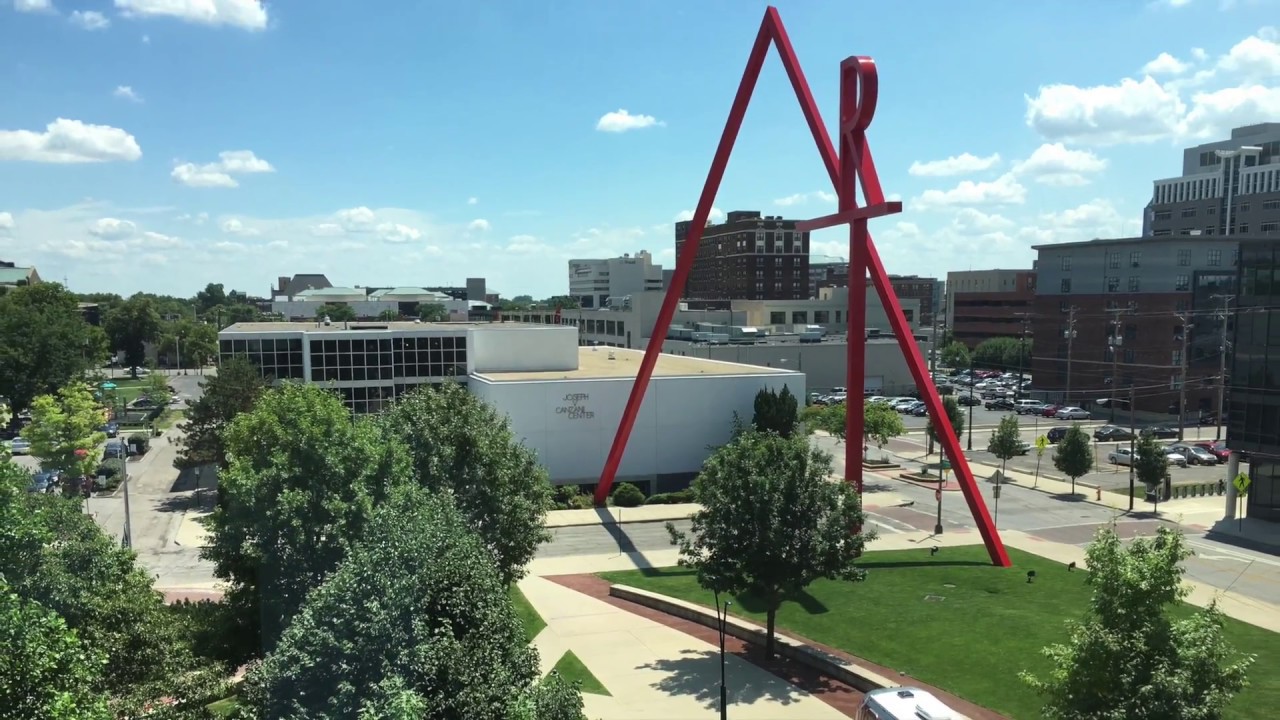
Columbus College of Art & Design (CCAD) has been one of the leading art and design institutions in the United States for more than 140 years. Its campus spans 14 buildings across downtown Columbus — a mix of studios, galleries, classrooms, and creative spaces serving students, faculty, staff, and visitors in a dense urban environment.
CCAD isn’t a large campus by parking standards. A few hundred permits, a few thousand transactions a year, a small security team managing enforcement alongside other responsibilities. But small doesn’t mean simple — and paper-based doesn’t mean functional. Before OPSCOM, parking at CCAD ran on manual processes: paper permits, in-person transactions, no online payment capability, and no connected view of what was happening across the parking operation.
What CCAD needed wasn’t an enterprise platform scaled down to fit. It needed a system that was the right size from the start — capable enough to handle permits, enforcement, and online payments properly, simple enough that a small team could run it without dedicated parking staff, and affordable enough to make sense for an institution with a lean operational budget.
“Simplicity of implementation including SSO, reasonable pricing, and system functionality.”
— Richelle Simonson, Associate VP Operations, Columbus College of Art & Design
On what sold CCAD on OperationsCommander
The Challenge
CCAD’s parking operation before OPSCOM was entirely paper-based. That meant every permit was a physical document, every transaction required in-person handling, and every piece of operational data lived in a folder rather than a system.
For a small campus team already managing security alongside parking, the manual overhead wasn’t just inconvenient — it was a genuine constraint on what was operationally possible.
- No online permit sales or payments. Students, staff, and visitors had no self-service option. Every permit purchase and every payment required a counter visit or direct staff involvement.
- No connected enforcement workflow. Without a digital record of who held which permit, enforcement in the field was difficult to do accurately and consistently.
- No integration with existing campus systems. CCAD uses Transact Campus (CashNet) as its payment provider and requires SAML SSO for campus application access. Any new system needed to connect to both from day one — not as a future roadmap item.
- Visitor and temporary parking managed manually. Day and overnight temp permits were handled at the Security Office, with no online option for visitors or short-term parking needs.
- No operational visibility. Without a connected system, there was no easy way to see permit sales trends, outstanding balances, or enforcement activity in aggregate. Reporting meant assembling information manually.
The challenge wasn’t unique to CCAD — it’s the standard starting point for smaller institutions that have managed parking as an administrative side task rather than a connected operation. The question was finding a platform that could solve it without requiring enterprise-scale budget or implementation complexity.
The Solution: Right-Sized from Day One
CCAD implemented OperationsCommander (OPSCOM) with ParkAdmin for permit management and ViolationAdmin for enforcement — a focused deployment matched to the actual scale and operational needs of the campus. The implementation was built around CCAD’s existing infrastructure from the start: CashNet payment integration and SAML SSO were part of the initial setup, not add-ons to figure out later.
CCAD’s main parking administrator brought significant experience from managing a much larger university parking operation. That background informed a deliberate approach: start with what’s needed, learn the system properly, and expand from a stable foundation. Permits and payment came first. Enforcement followed once the team was comfortable with the platform.
ParkAdmin — Online Permit Management
ParkAdmin replaced the paper-based permit workflow with a fully online, self-service environment that integrates directly with CCAD’s existing campus systems.
- Online permit sales for student, staff, and faculty permit types — purchased and managed through a self-service portal without counter visits
- Temporary permit management for day and overnight parking — available online rather than requiring a trip to the Security Office
- Visitor parking pass management — coordinated through the Security Office with digital records replacing paper tracking
- Print-from-home temporary permits for short-term parking needs
- Transact Campus (CashNet) payment integration — CCAD’s existing campus payment provider connected from day one, with no new payment system for students or staff to learn
- SAML SSO integration — single sign-on through CCAD’s campus identity system, consistent with how students and staff access other campus applications
- Permit inventory and usage tracking — giving administrators visibility into allocation and availability across parking zones
ViolationAdmin — Field Enforcement
ViolationAdmin gave CCAD’s security team a connected enforcement workflow — replacing informal manual processes with a consistent, evidence-backed approach that works at the scale of a small campus operation.
- Android handheld enforcement device with real-time access to permit data in the field — officers verify permit status against live records rather than checking paper lists
- Digital violation issuance with photographic evidence attached to each record — supporting clear documentation for any disputes
- Online violation payment for students and staff — citations resolved without office visits
- Pre-printed branded violation rolls for physical ticket issuance where needed
- Enforcement activity reporting — giving administrators a clear view of citation patterns and compliance trends across campus
For a small team where enforcement is one responsibility among several, the value of a connected enforcement tool isn’t just accuracy — it’s the time saved by not having to manually track, reconcile, or follow up on violations that the system now handles automatically. Learn more about how connected parking enforcement systems improve consistency and reduce administrative overhead for small campus operations.
Results
Paper Replaced with a Connected Online Platform
The before-and-after at CCAD is straightforward: a paper-based operation with manual processes at every step replaced by a connected system where permits are purchased online, payments are processed through CashNet, enforcement is documented digitally, and violations are paid without office visits. The administrative overhead of running parking manually — handling in-person transactions, tracking permits on paper, reconciling payments without a system — is gone.
Richelle Simonson described CCAD’s parking before OPSCOM as “paper based and not efficient.” The operational shift to an online platform changed both of those things.
SSO and Payment Integration Working from Launch
For a small institution, integration failures at launch are disproportionately costly — there’s no dedicated IT team to troubleshoot, and the people affected are the same people running the operation. CCAD’s SAML SSO and CashNet integrations were in place from day one, which meant students and staff could log in with existing campus credentials and pay through the payment system they already use. No new accounts, no friction at the point of first use.
Value at the Right Scale
“Value.”
— Richelle Simonson, Associate VP Operations, CCAD
Describing OperationsCommander in one word
For a small institution with a lean operational budget, affordability isn’t just a nice-to-have — it’s a prerequisite. CCAD’s evaluation criteria included pricing alongside functionality, and the combination of reasonable licensing costs, SSO and payment integration at no additional surprise cost, and a feature set matched to actual operational needs is what made OPSCOM the right fit.
That value extends to support. One of the unexpected benefits Simonson highlighted was the quality of customer service — specifically that inquiries get real responses, problems get solved, and the team is approachable. For a small campus operation without dedicated parking staff, responsive support from the platform provider matters more than it does at institutions with larger internal teams.
A Foundation for Future Growth
CCAD started with permits and phased enforcement in once the team was comfortable with the platform. That staged approach — common at smaller institutions where implementation bandwidth is limited — worked because the platform is built to support it. Modules activate when the operation is ready for them, not on an implementation timeline driven by the vendor.
As CCAD’s parking program continues to evolve, the platform scales with it. Whether that means expanded permit categories, additional enforcement devices, or eventually adding IncidentAdmin for campus security workflows, the foundation is already in place.
The Right Platform for a Small Campus Operation
CCAD’s experience makes a point that’s worth stating directly: not every parking operation needs an enterprise deployment, and not every institution should have to choose between an underpowered system and one that’s more than they need.
A 140-year-old art college in downtown Columbus, managing a few hundred permits and a small enforcement operation with a lean security team, needed a platform that worked properly, integrated with existing campus systems on day one, cost what a small institution can afford, and came with support that actually responds. That’s what CCAD got — and Richelle Simonson recommends it to others who ask.
For other small colleges and institutions evaluating a similar transition from paper-based parking, the Anderson University case study and the Texas Tech Health Sciences case study offer relevant comparisons at different scales and operational contexts.
Read more OPSCOM client case studies or request a demo to see how the platform fits your operation’s scale and needs.
Related Resources
- Parking Management Systems — how connected platforms replace manual workflows
- Parking Enforcement Systems — consistent, evidence-based enforcement for campus operations
- Parking Data and Analytics — operational visibility from a connected system
- OPSCOM for Higher Education — campus parking at any scale
- Anderson University — legacy system replacement at a mid-size campus
- Cambrian College — 37% budget savings with full platform integration
- Brandon University — restoring revenue visibility from a manual operation
