Parking Operations Management: How to Run Efficient Parking Programs
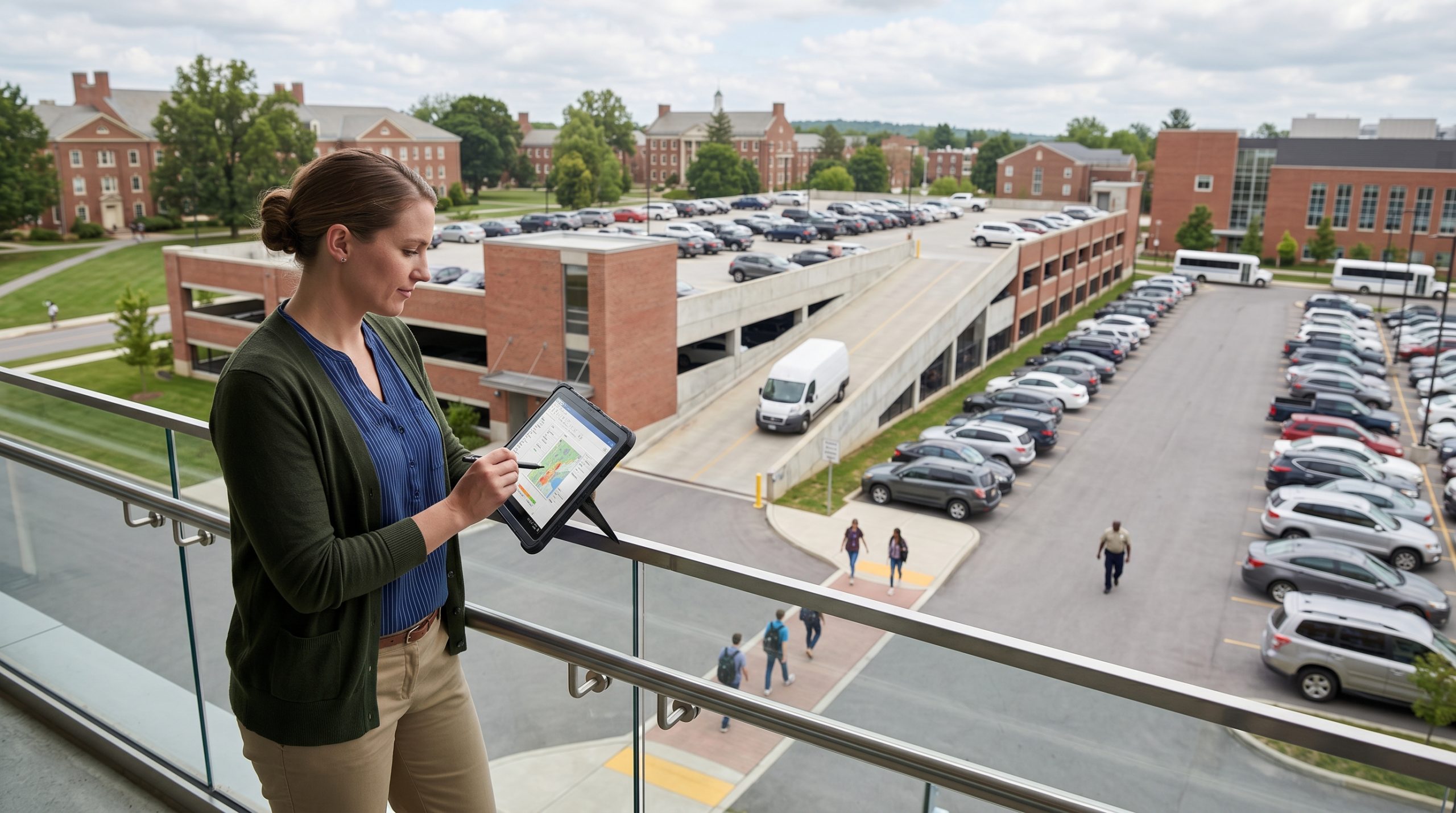
Most writing about parking management systems focuses on the technology — what features exist, how they’re built, what data they produce. Less attention goes to what it actually looks like to run a parking operation day-to-day once a connected system is in place.
That operational picture matters. A system can be architecturally sound, well-integrated, and full of useful features — and still create friction if it doesn’t match how parking staff actually work. The goal isn’t just a better system. It’s a better operation.
This post covers the day-to-day reality of parking operations management in a connected environment: what staff workflows look like, what administrators can see and act on in real time, how remote access changes operational oversight, and what the efficiency gains of a unified system actually mean in practice.
How a typical operational day runs
Walking through a typical operational day makes the value of a connected system concrete in ways that feature descriptions don’t capture.
Morning: permit administration
A permit administrator arrives and opens the OPSCOM dashboard. New permit applications from overnight self-service registrations are visible in the queue — those that passed automatic eligibility checks are already processed; those flagged for manual review are waiting. She works through the flagged applications, approves or denies each one, and moves on. Total time: fifteen minutes that previously took an hour of email correspondence and manual record updates.
Enforcement patrol starts at 8am. Officers log in on their mobile devices and begin validating plates. Because permit data is live, every purchase processed in the morning queue is immediately visible in the field. There’s no morning export to run, no device to update, no window of inaccuracy to manage around.
Mid-morning: exceptions and incoming inquiries
A parker calls claiming they have a valid permit but received a citation. The administrator opens the citation record in ViolationAdmin and sees the complete picture immediately: the plate read, the timestamp, the officer, the GPS location, and — critically — the permit status of that vehicle at the exact moment of the citation. The permit was purchased forty minutes after the citation was issued. The ticket stands, but the call takes three minutes instead of twenty because the information was all in one place.
Two new appeals come in through the online portal. The administrator reviews each one with the full evidence package visible — photos, GPS, timestamps, chalking records where applicable. She approves one (the permit was valid; the officer scanned the wrong plate), denies the other (the evidence is clear), and sends responses through the system. Both cases close without phone calls.
Afternoon: enforcement oversight
A parking supervisor monitors enforcement activity through the administrative dashboard during the afternoon patrol shift. Citations are appearing in real time as officers issue them. She notices an unusually high citation count in one lot — more than the typical pattern for that zone on a Wednesday afternoon. She checks the permit data and sees that a large block of faculty permits in that lot expired at the start of the month and haven’t been renewed. She flags the lot for additional patrol coverage and drafts a renewal reminder notice to go out to the affected permit holders.
This kind of real-time operational awareness is only possible when enforcement data is visible to administrators as it’s generated, not when it arrives as a batch report at end of day.
End of day: reporting
The parking director wants a weekly summary before the Friday morning management meeting. She pulls a report in OPSCOM showing citation counts by zone, collection rate for the week, permit revenue versus prior week, and appeal outcomes. The report takes five minutes to generate because the data is all in one system. It takes fifteen minutes to interpret and add context. She sends it before leaving the office.
What remote access actually changes
Cloud-hosted parking management systems allow administrators and managers to access the full operational picture from anywhere — office, home, remote campus, or off-site. This sounds like a convenience feature. In practice, it changes operational accountability in meaningful ways.
A parking director who can see enforcement activity, citation counts, and payment status from home isn’t just more flexible — they’re more informed. When an issue arises outside business hours, they can assess it with actual data rather than waiting until morning. When they’re travelling or working from a different building, operations don’t slow down waiting for someone to be physically present at a workstation.
Carleton University’s Director of University Safety specifically cited remote access as a meaningful operational advantage — the ability to monitor and manage both parking and security operations from any location was central to how the department operated across a large, distributed urban campus. Read the Carleton University case study.
Remote access also matters for multi-site operations. Forks North Portage manages 20+ lots spread across a major Winnipeg destination complex. Managing enforcement and permit activity across those lots without a central, remotely accessible system would require significant on-site administrative presence at each location. A cloud-hosted connected system makes the entire portfolio visible and manageable from one interface. Read the Forks North Portage case study.
Staff roles and system access
Parking operations involve multiple roles with different system needs. Enforcement officers need field validation and citation issuance. Permit administrators need registration management, eligibility review, and waitlist processing. Finance staff need payment reporting and revenue reconciliation. Supervisors need operational oversight and enforcement monitoring. Directors need strategic reporting.
In a connected system, all of these users are working from the same underlying data — but with access controls configured to their role. An enforcement officer doesn’t need access to administrative permit workflows. A finance administrator doesn’t need to see enforcement officer notes. Role-based access ensures each user sees what they need to do their job without being overwhelmed by — or having inappropriate access to — the rest of the system.
This role-based model also matters for audit trails. Every action in the system — permit approval, citation void, payment processed, appeal decided — is logged with the user who performed it and the timestamp. When questions arise about what happened and why, the answer is in the system’s audit log rather than in someone’s memory or a paper trail that may not exist.
Where operational efficiency actually shows up
The efficiency gains from a connected parking management system tend to show up in the same places across different types of organizations.
Reduced counter and phone traffic. Self-service permit registration, purchase, renewal, and appeal submission removes a significant portion of the transactions that previously required staff involvement. The parkers who use self-service (which, when the portal is reliable, is most of them) never interact with staff at all. Staff time redirects to exception handling and higher-value work.
Eliminated reconciliation work. In fragmented systems, a meaningful portion of staff time goes to reconciling data across systems — matching payment records to permit records, confirming that citation data made it into the payment system, chasing down discrepancies between enforcement activity and revenue reports. In a connected system, this reconciliation work simply doesn’t exist because there’s nothing to reconcile.
Faster dispute resolution. When all citation evidence is in one place, disputes take minutes to review rather than the time it takes to pull records from multiple systems. Faster resolution means shorter case queues, less outstanding balance, and parkers who get answers quickly enough that their frustration doesn’t escalate.
Higher collection rates. The Town of Perth achieved a 91% ticket collection rate in Year 1 — a direct outcome of connected enforcement, immediate citation availability in the payment portal, and frictionless online payment. Parkers who encounter no friction between receiving a citation and being able to resolve it tend to resolve it. Read the Town of Perth case study.
Operational visibility that enables improvement. Brandon University couldn’t diagnose why parking revenue was declining until they had a system that connected enforcement activity to payment outcomes to escalation tracking. The problem wasn’t that violations weren’t being issued — it was that repeat offenders were going untracked and escalation wasn’t happening. A connected system made that visible. Read the Brandon University case study.
The staff experience of a connected system
It’s worth saying directly: the operational benefits of a connected parking management system are only realized if the people using it find it workable. A system that’s architecturally sound but operationally frustrating will be worked around rather than used correctly.
OPSCOM’s design reflects decades of feedback from the parking professionals who use it daily — enforcement officers, permit administrators, supervisors, and directors across university campuses, municipalities, healthcare campuses, and private operators. The workflows are built around how parking operations actually function, not around how a software architect imagined they should.
For the officers in the field, that means a mobile enforcement interface that surfaces the right information at the right moment without requiring navigation through screens that aren’t relevant to their current task. For permit administrators, it means a workflow that handles the common cases automatically and surfaces exceptions clearly. For directors, it means reporting that’s accessible without requiring a data analyst to produce it.
Explore parking management systems in depth
- Modern Parking Management Systems: How Parking Operations Actually Work Today
- Parking Permit Management Systems: How Digital Permits Actually Work
- Parking System Architecture: Why a Single System Matters
- Hybrid and Flexible Parking: Managing Changing Demand
- ParkAdmin: OPSCOM’s parking management platform
- Parking Management Systems Knowledge Center